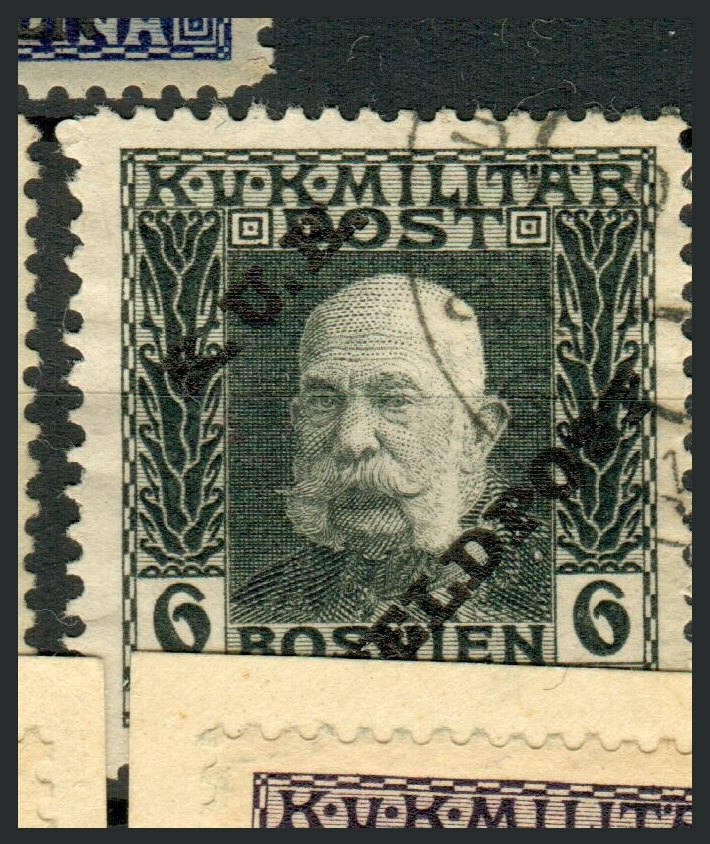
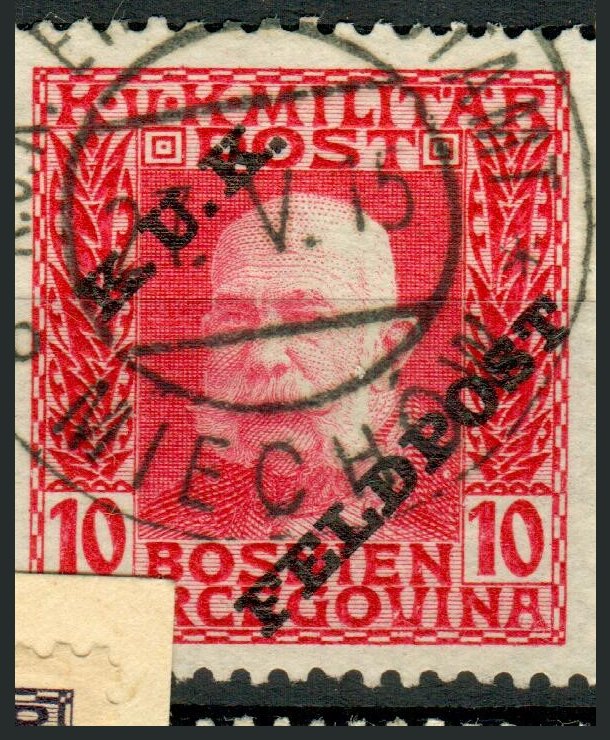
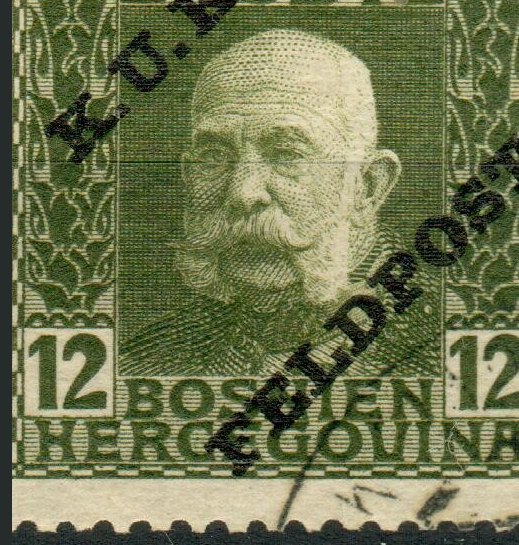
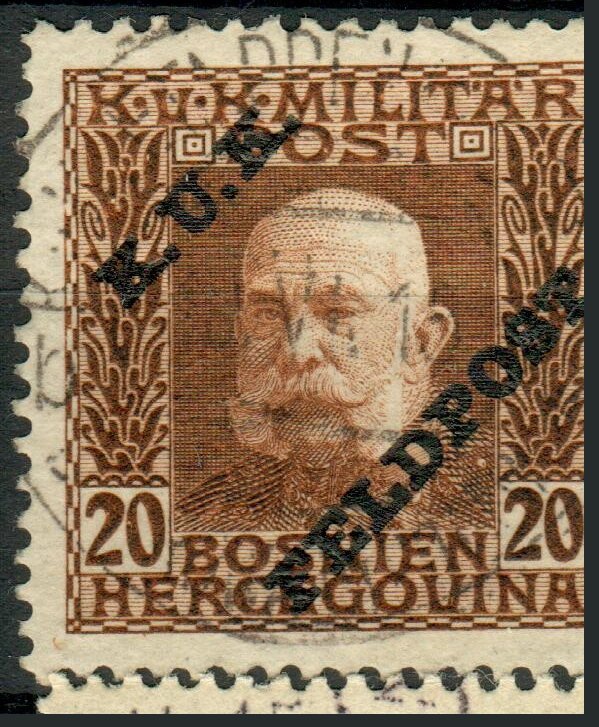
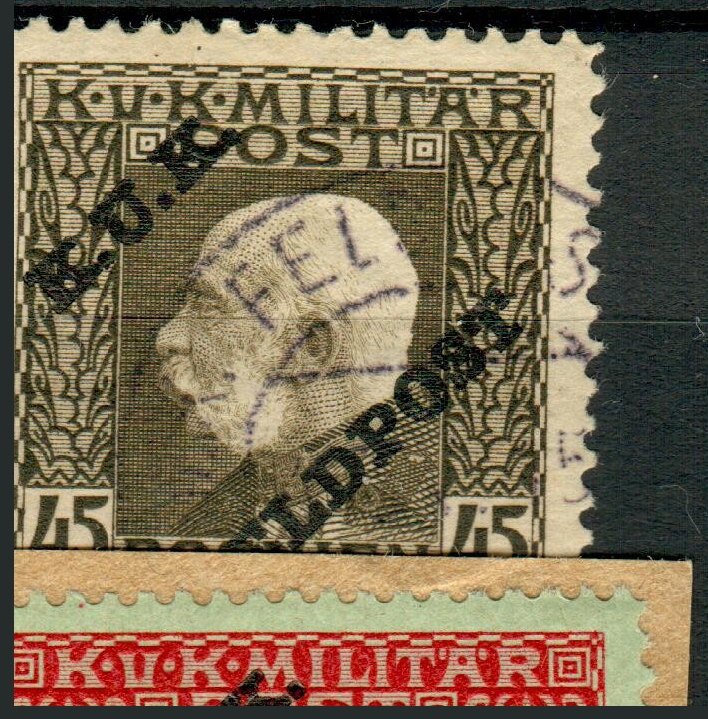
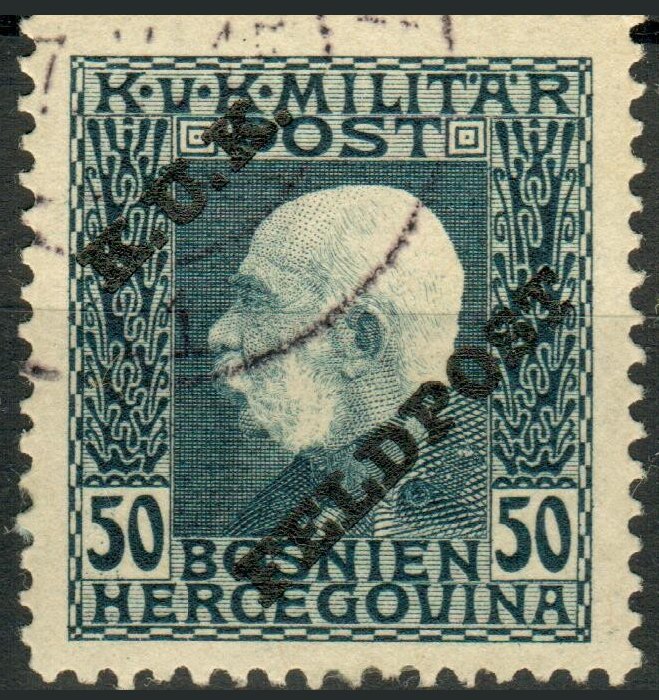
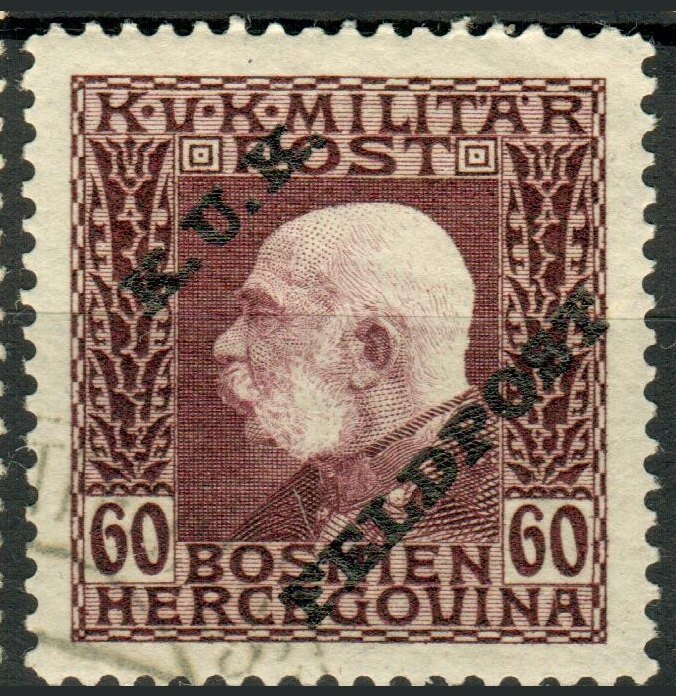
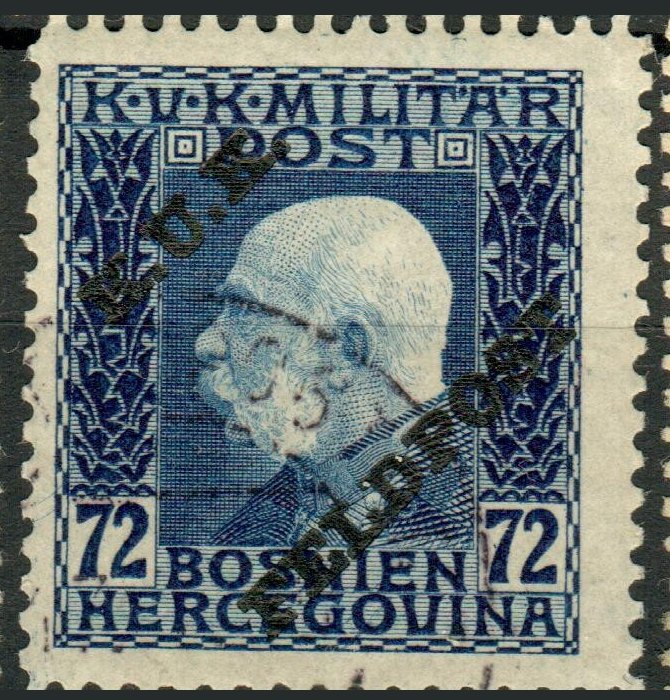
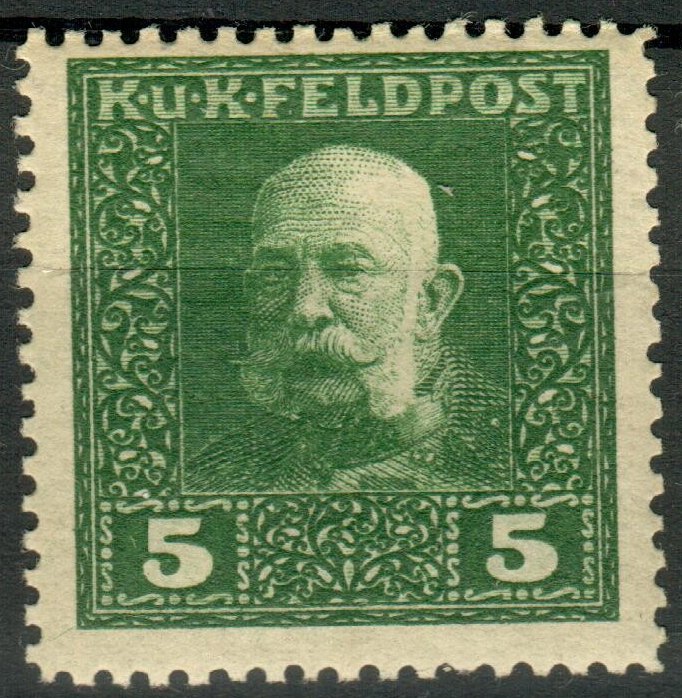
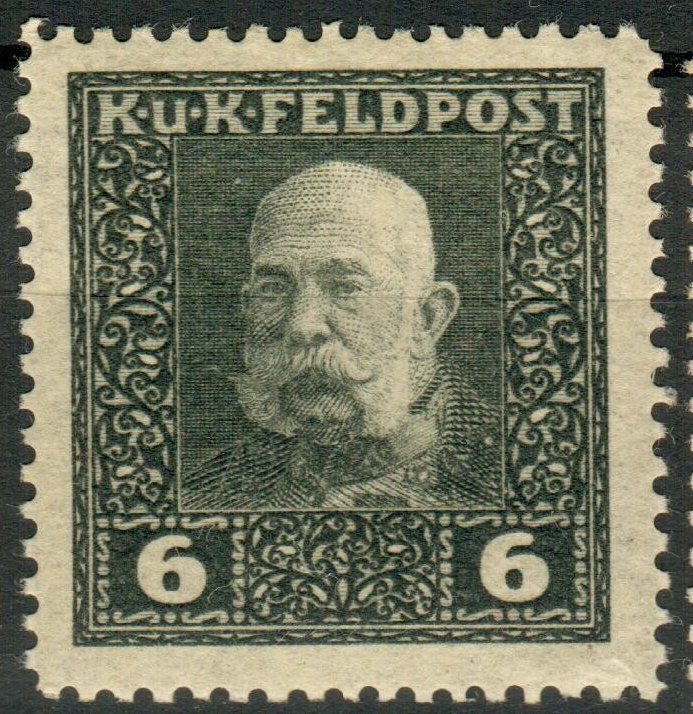
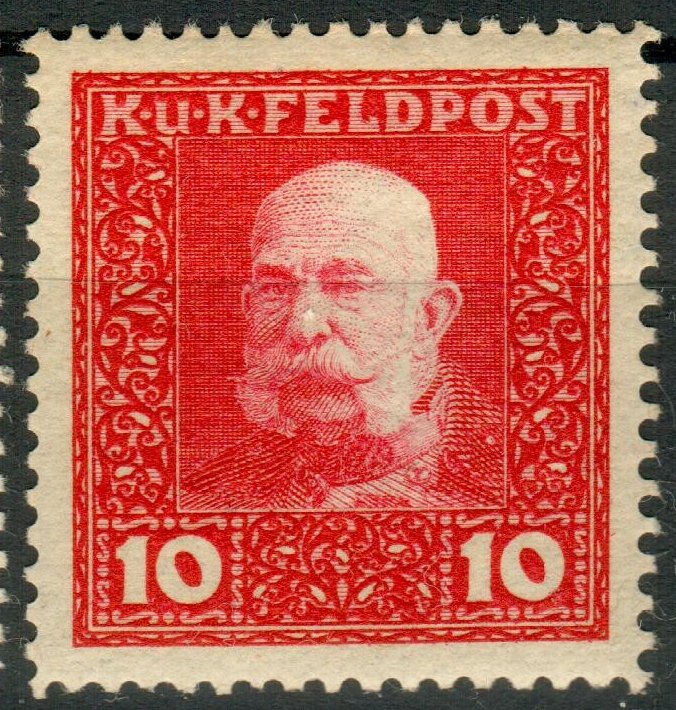
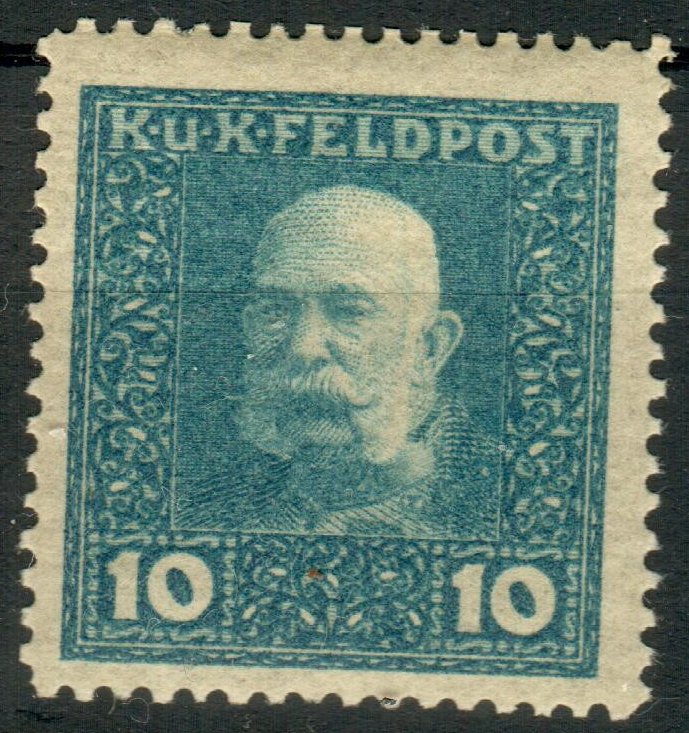
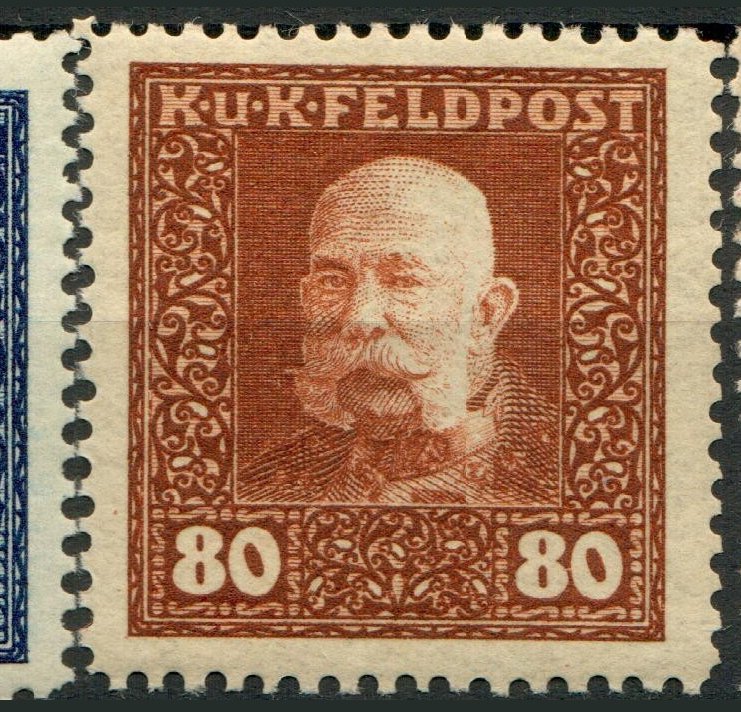
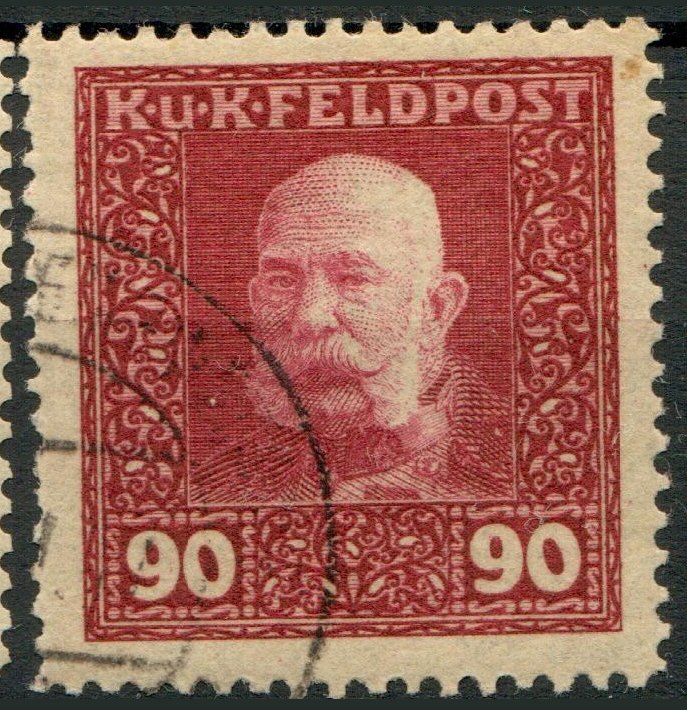
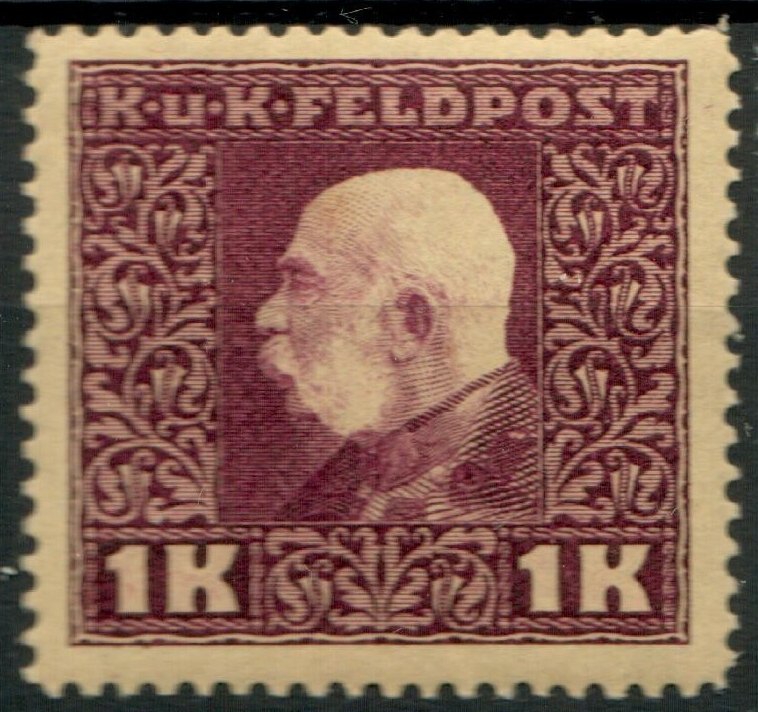
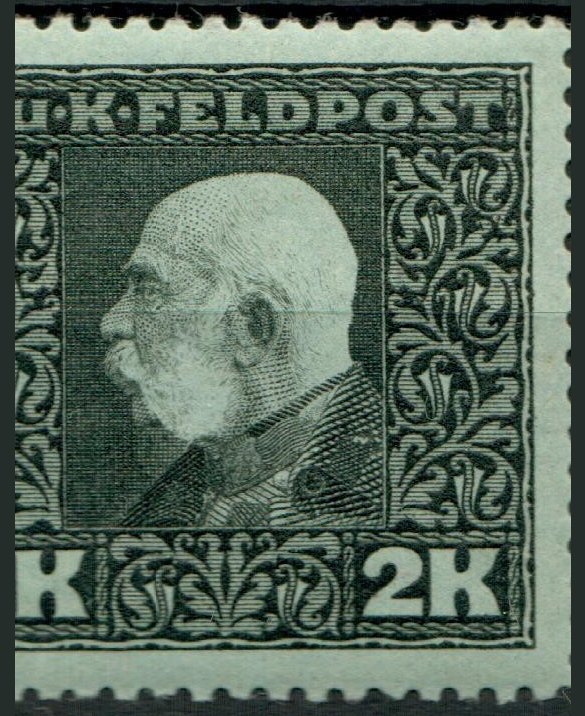
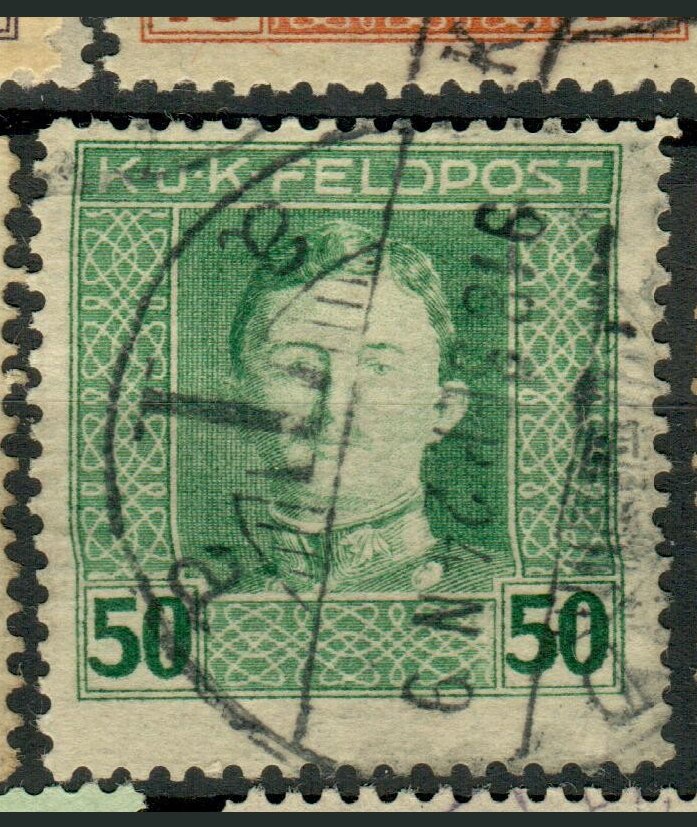
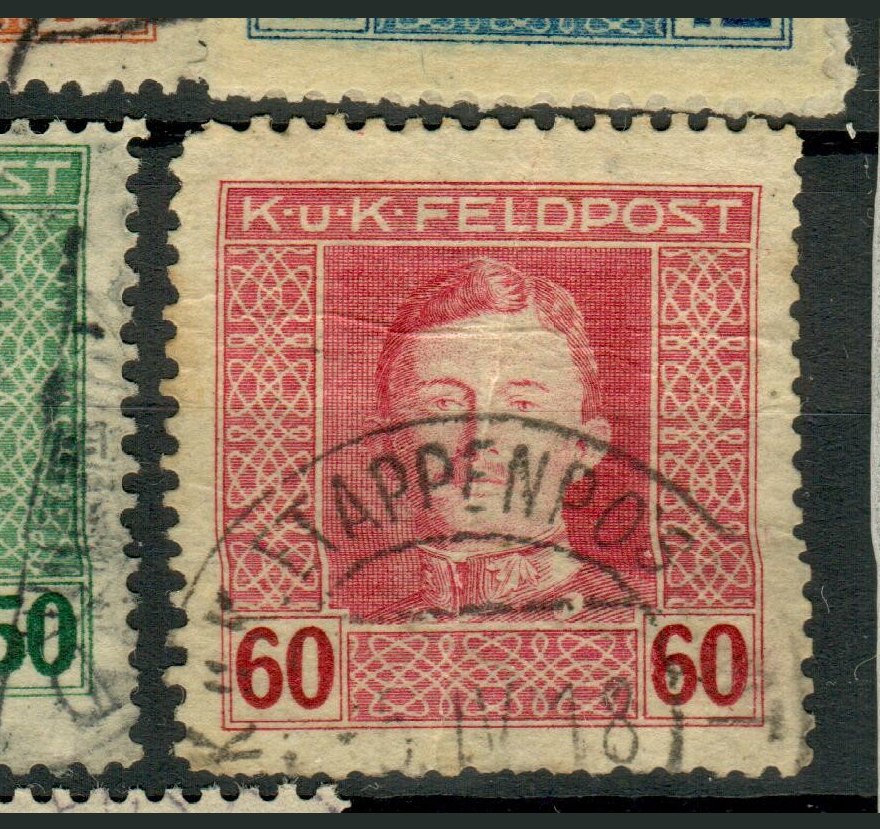
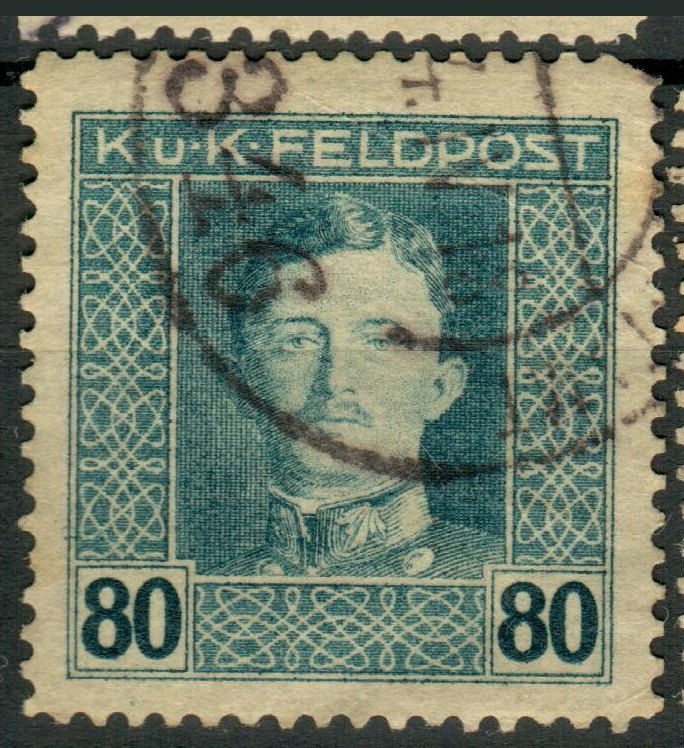
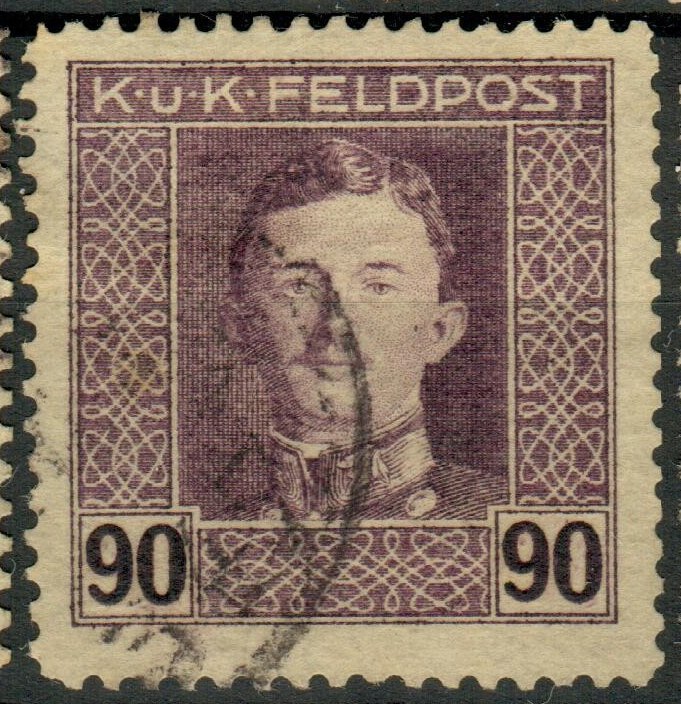
Value●○○○○Common< 5●●○○○Low5 – 50●●●○○Medium50 – 500●●●●○High500 – 5 000●●●●●Exceptional5 000 +left column mint, right column used · USD, catalogue
1915
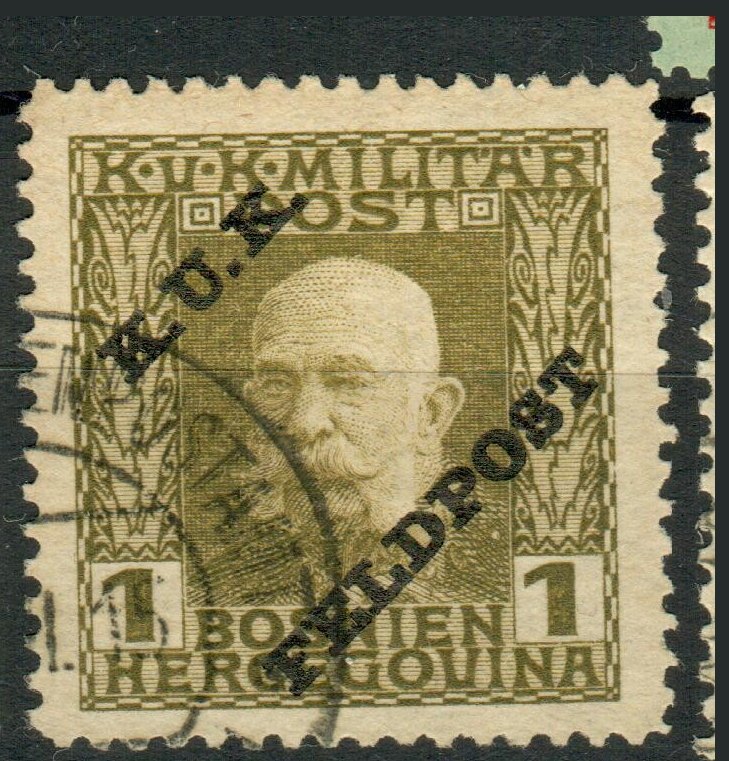
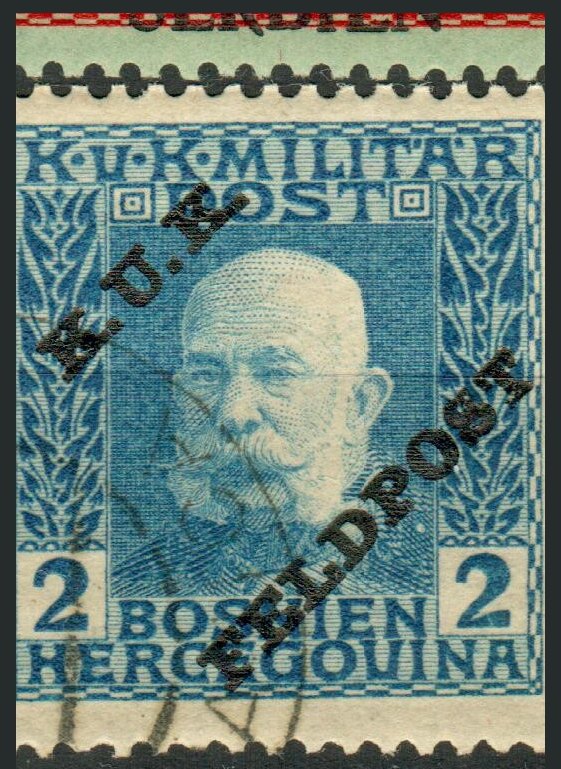
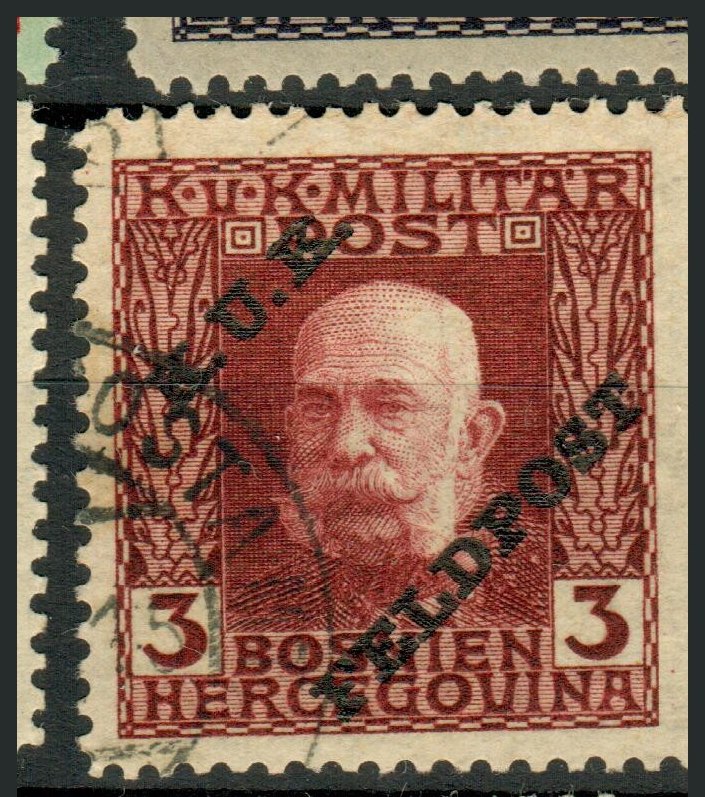
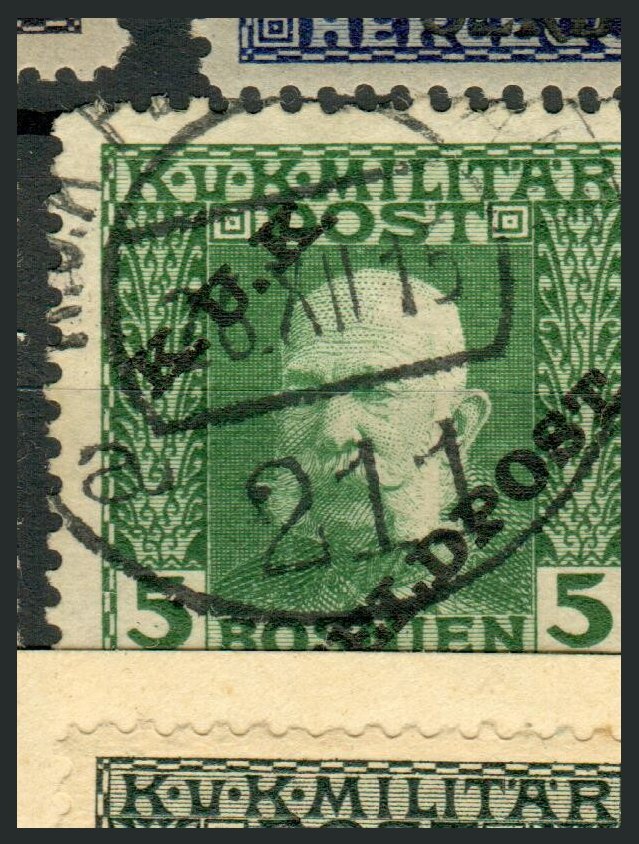
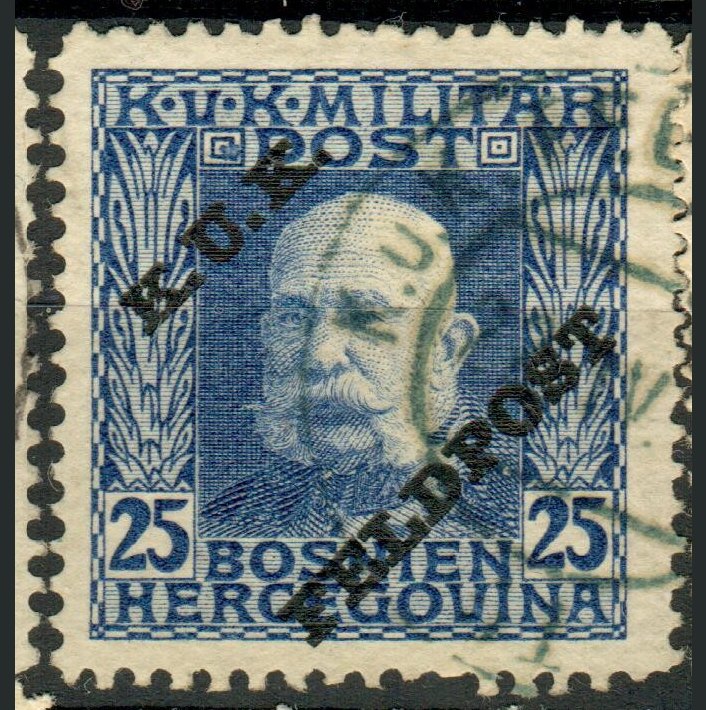
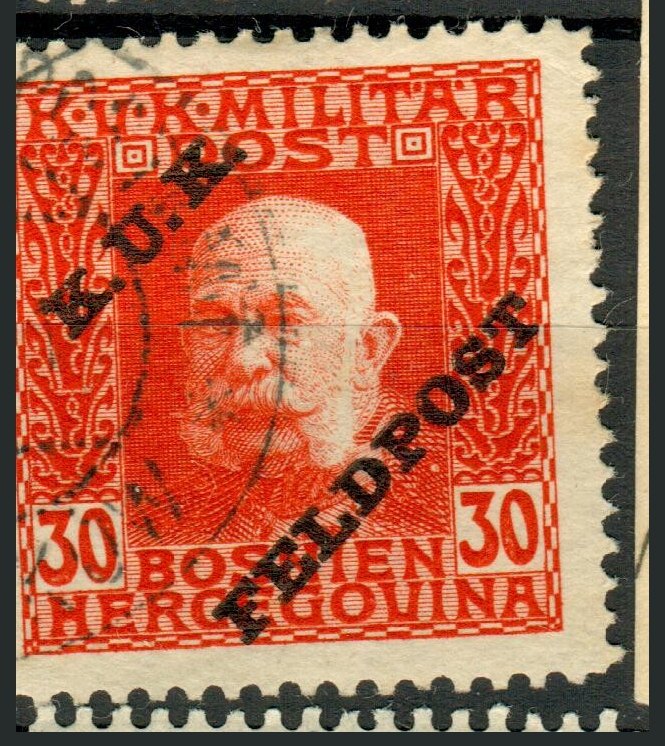
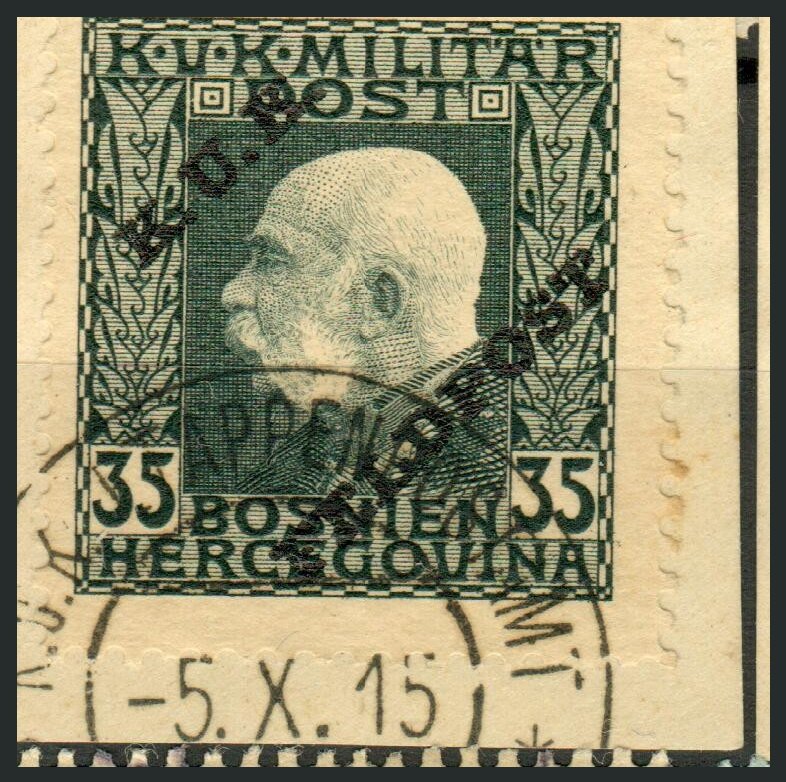
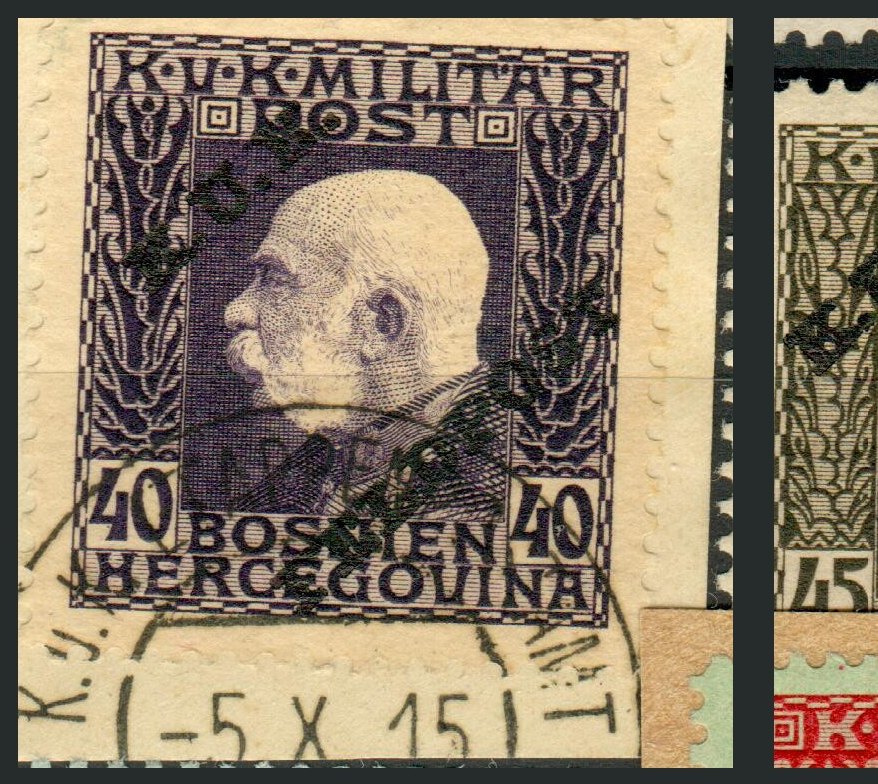
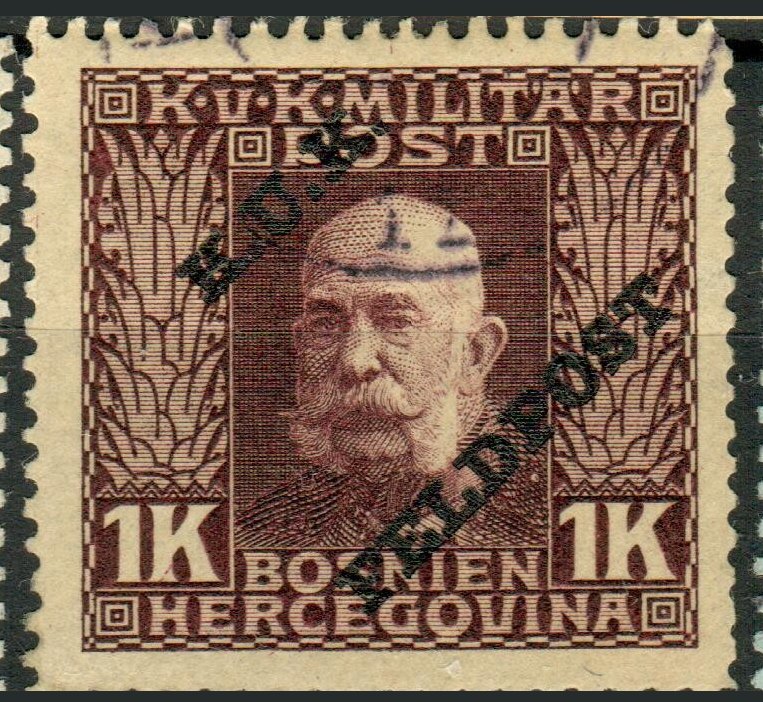
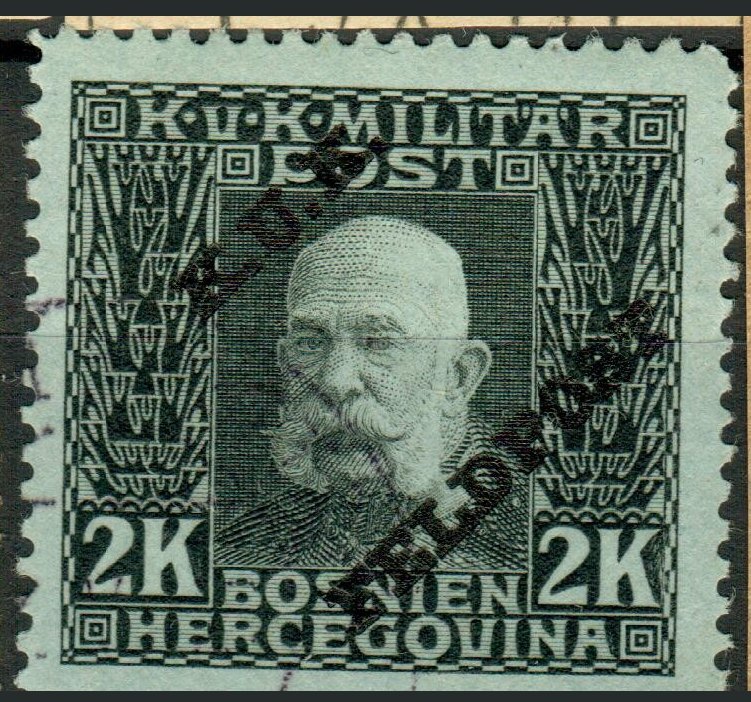
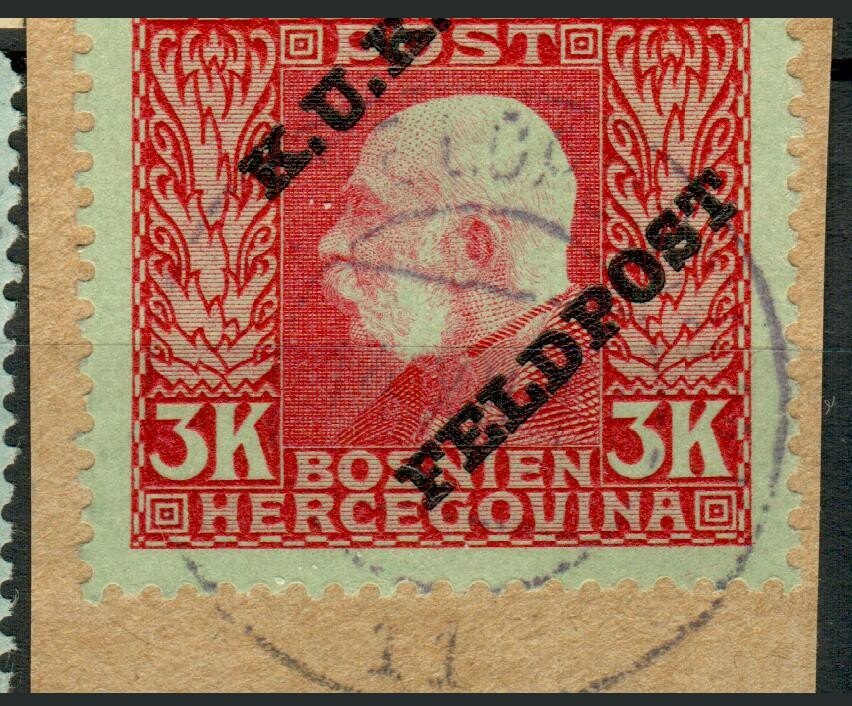
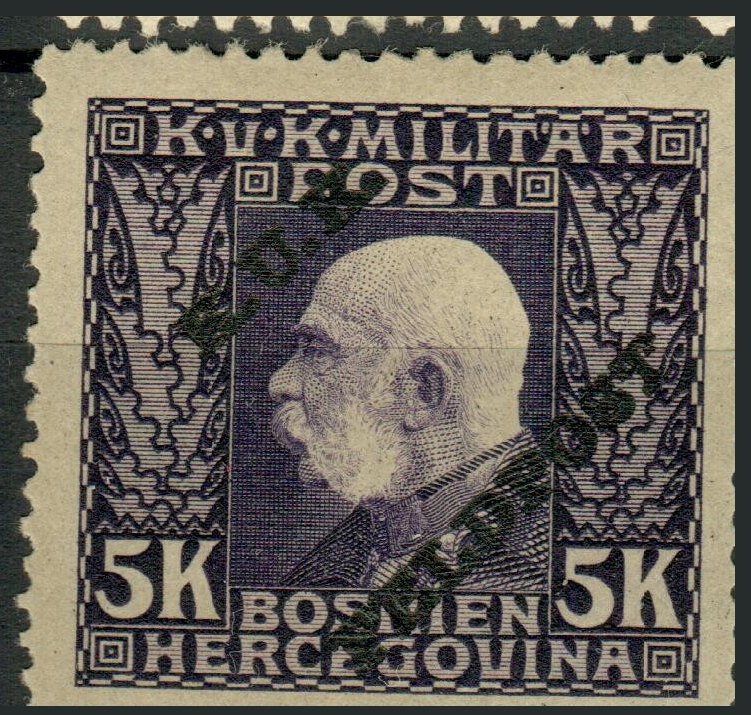
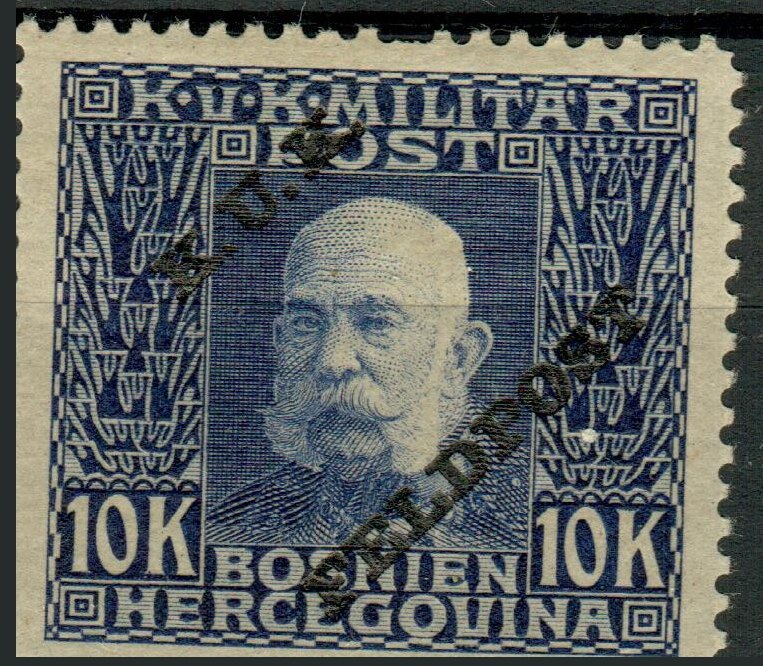
1915 Bosnia and Herzegovina Postage Stamps Overprinted "K. U. K. FELDPOST"
Issued
March
Watermark
None
Perforation
12½
About this issue
The K. u. K. (Imperial and Royal) field post issued stamps from 1915 to 1918 for the territories occupied by the Austro-Hungarian army. The first were Bosnian stamps overprinted 'K. U. K. FELDPOST'.
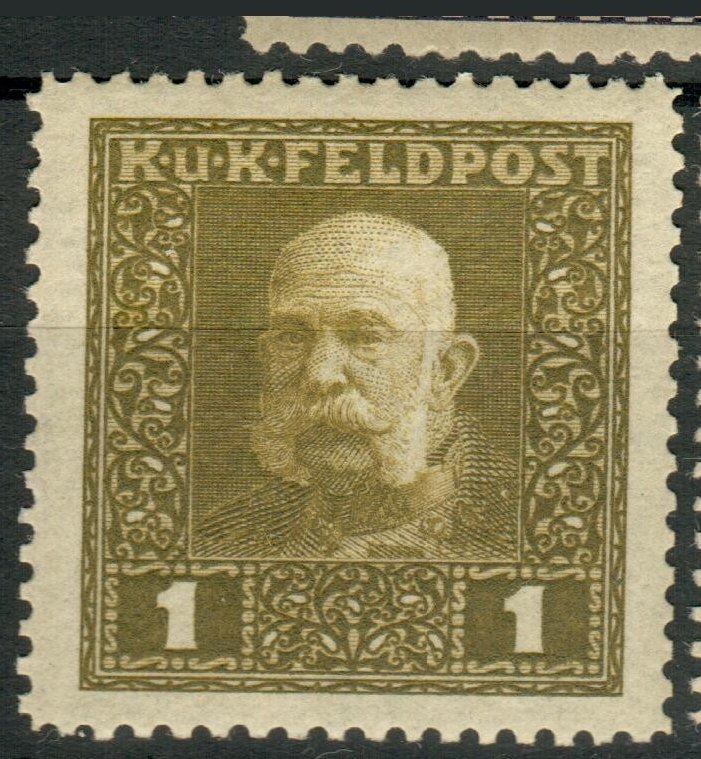
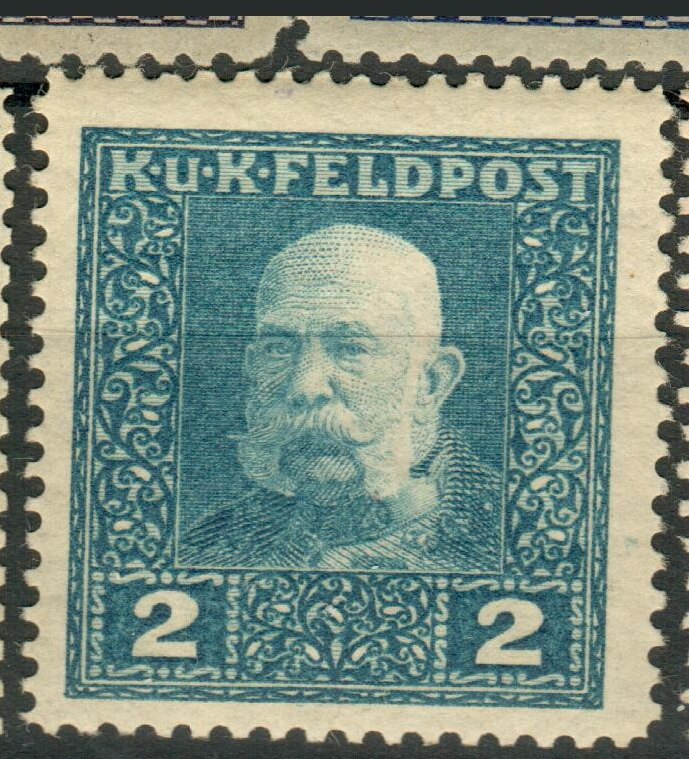
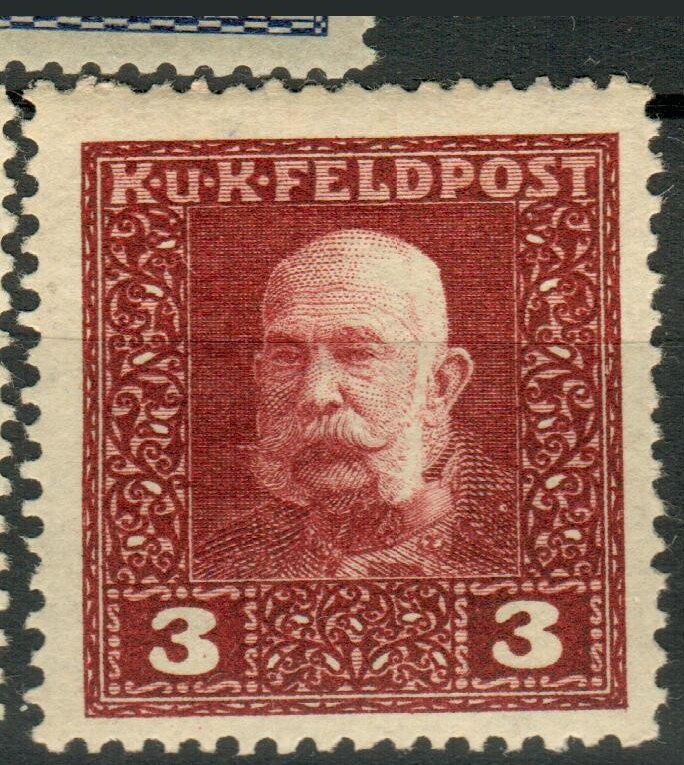
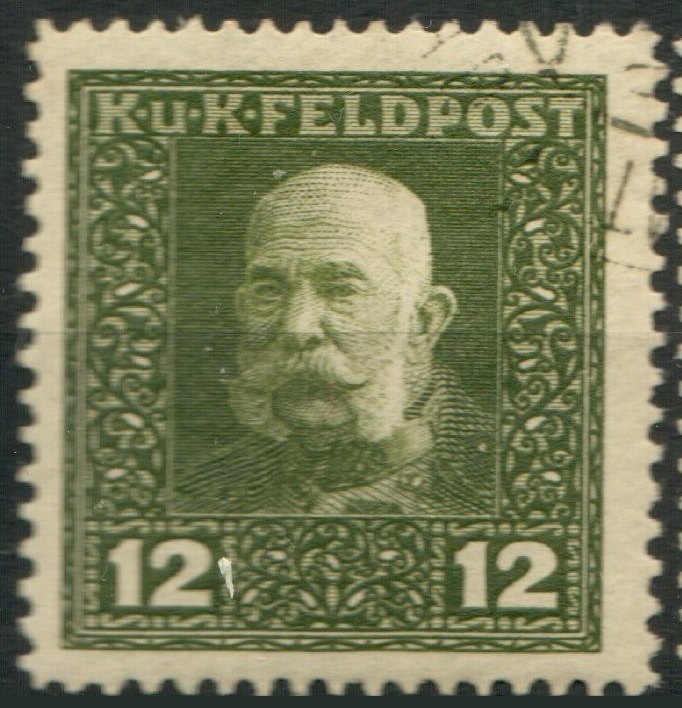
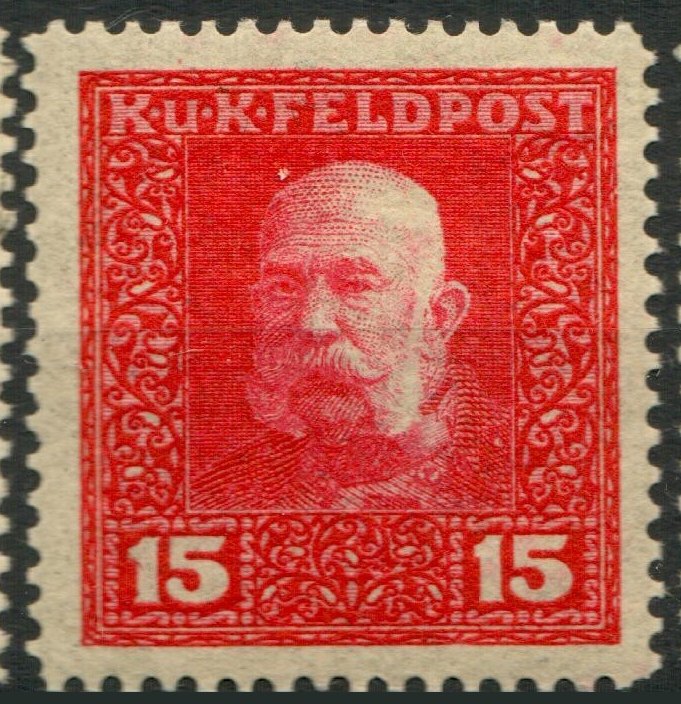
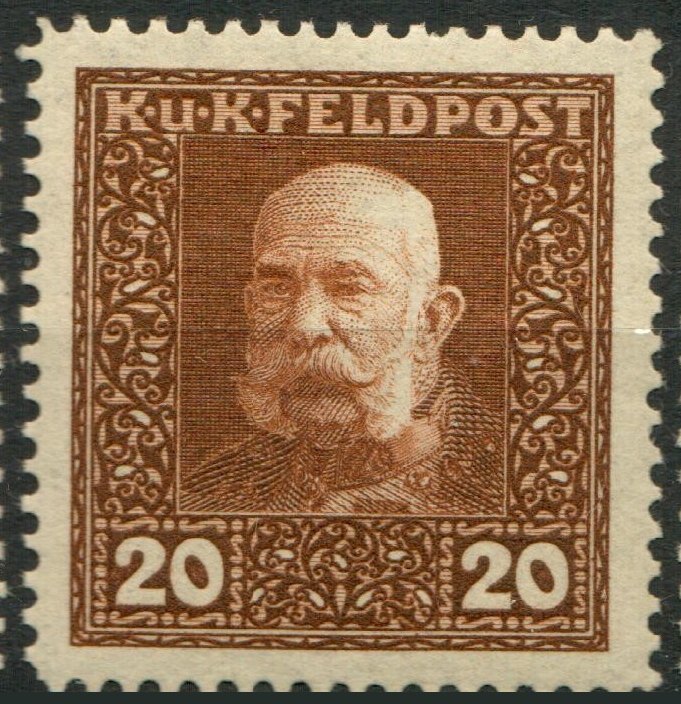
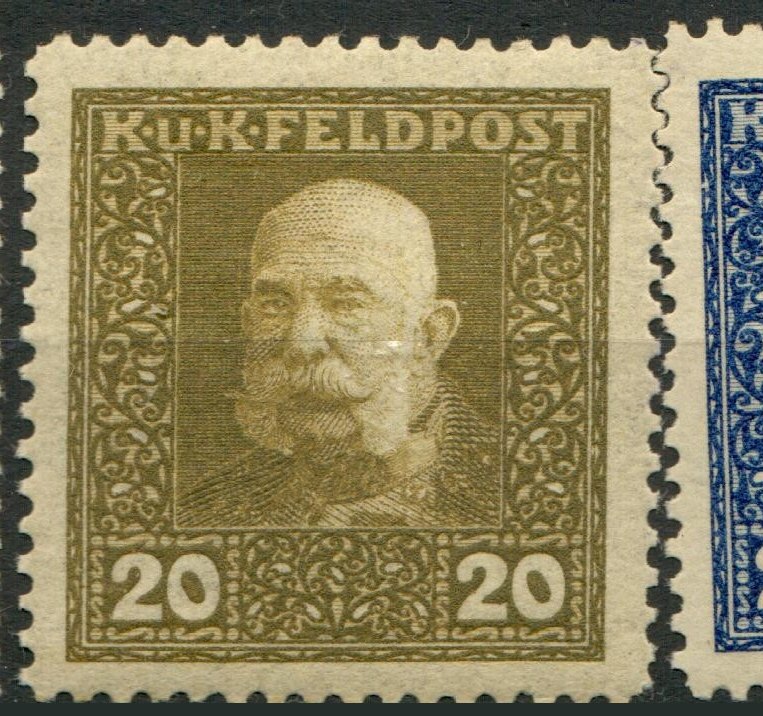
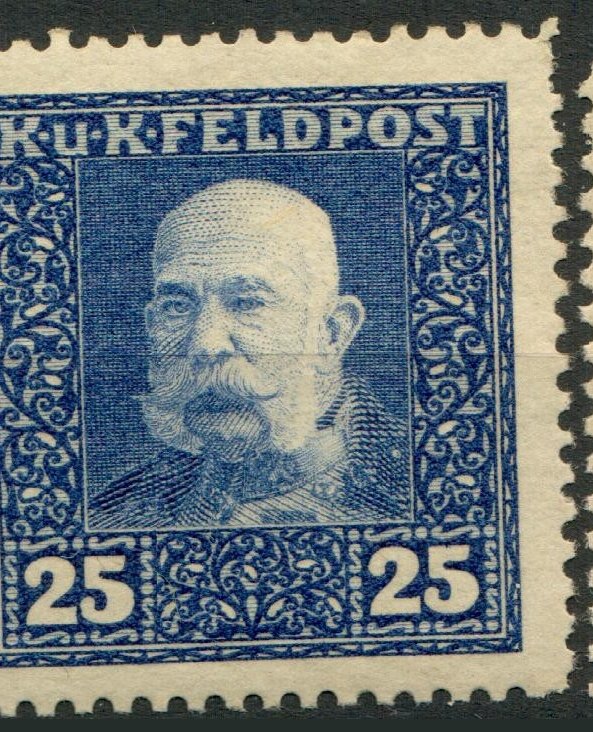
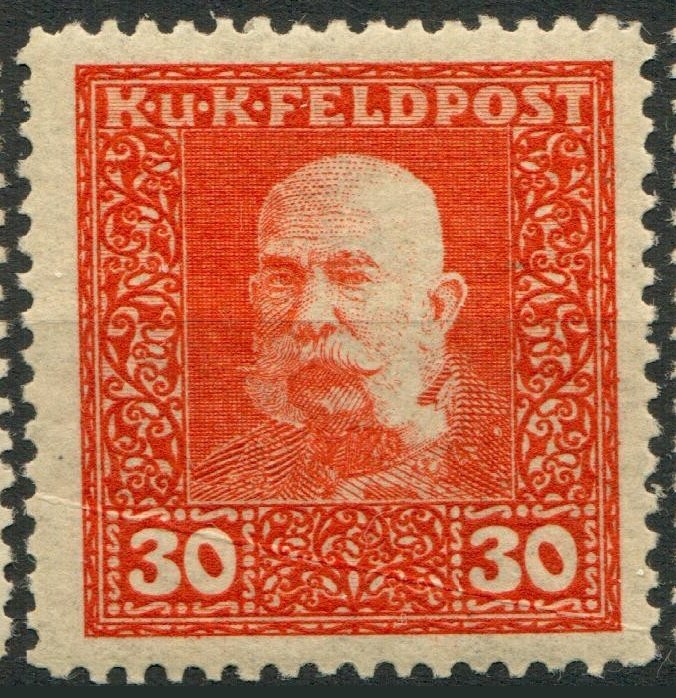
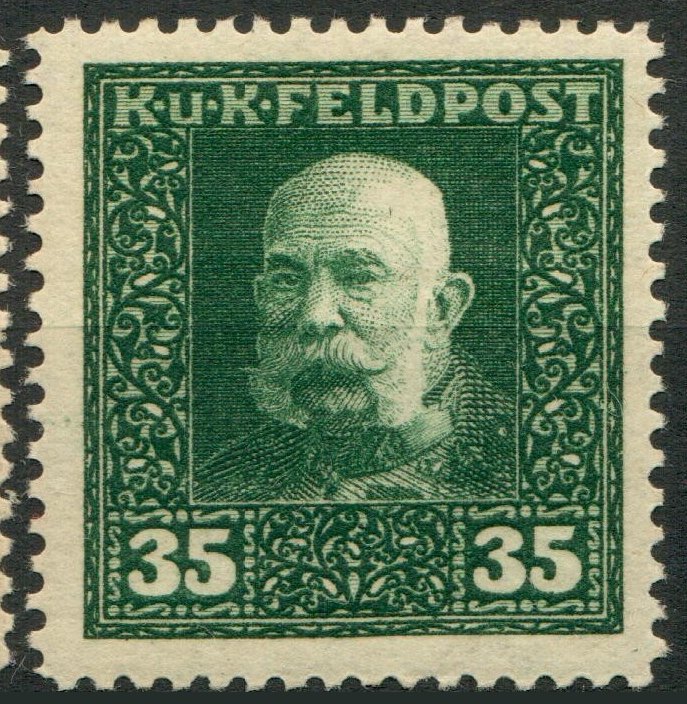
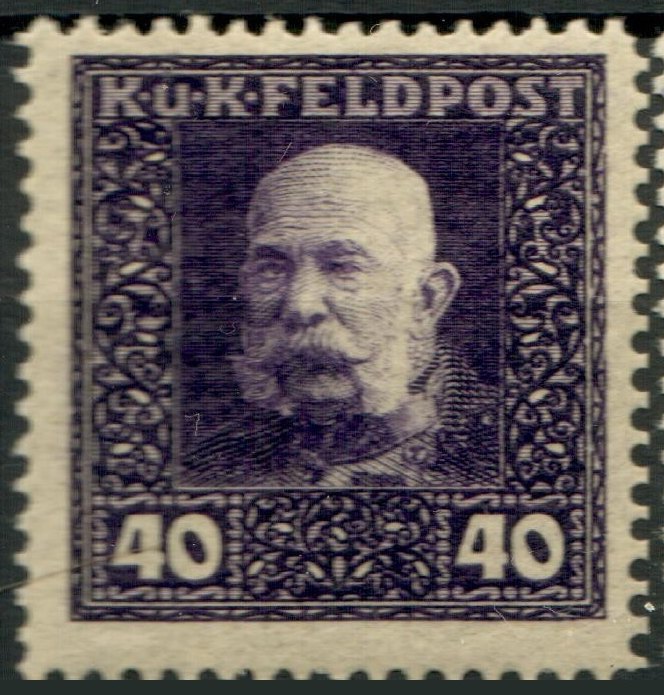
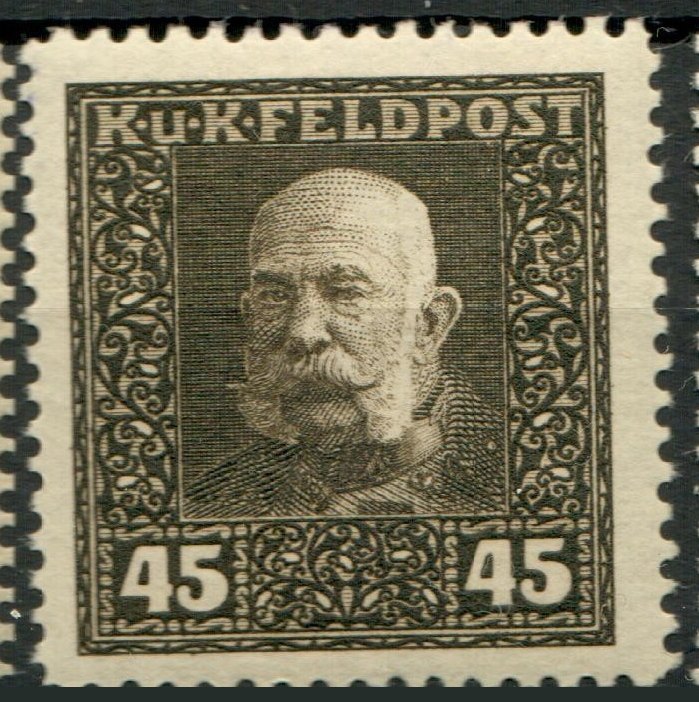
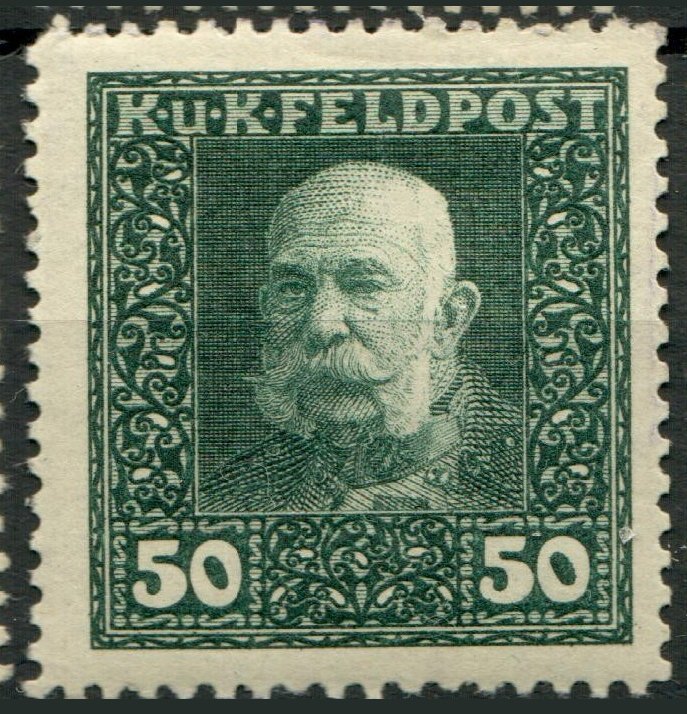
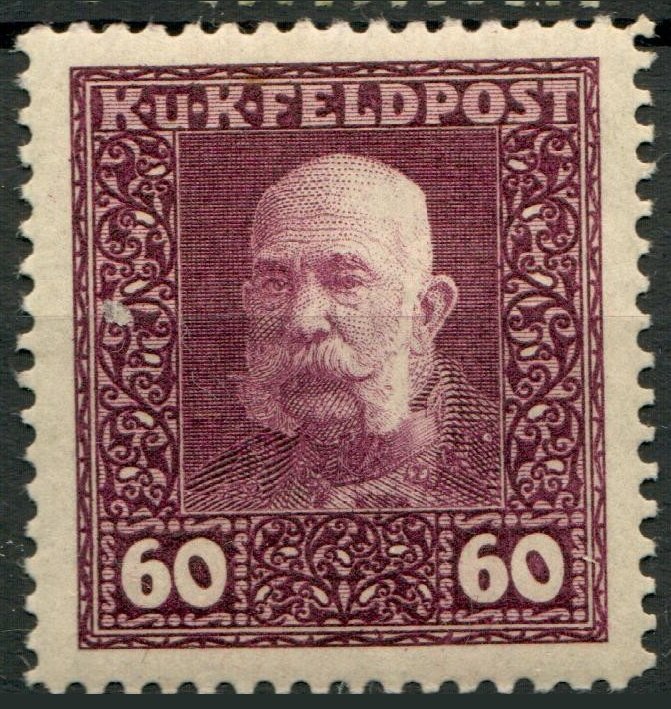
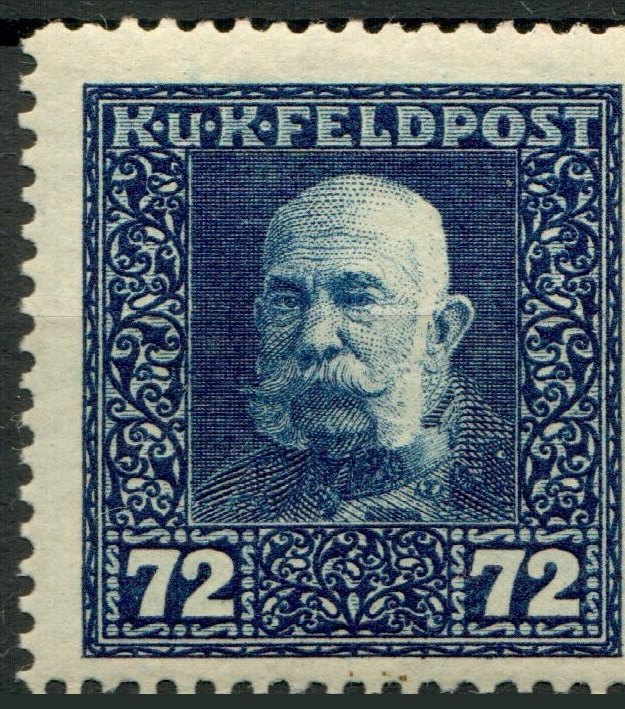
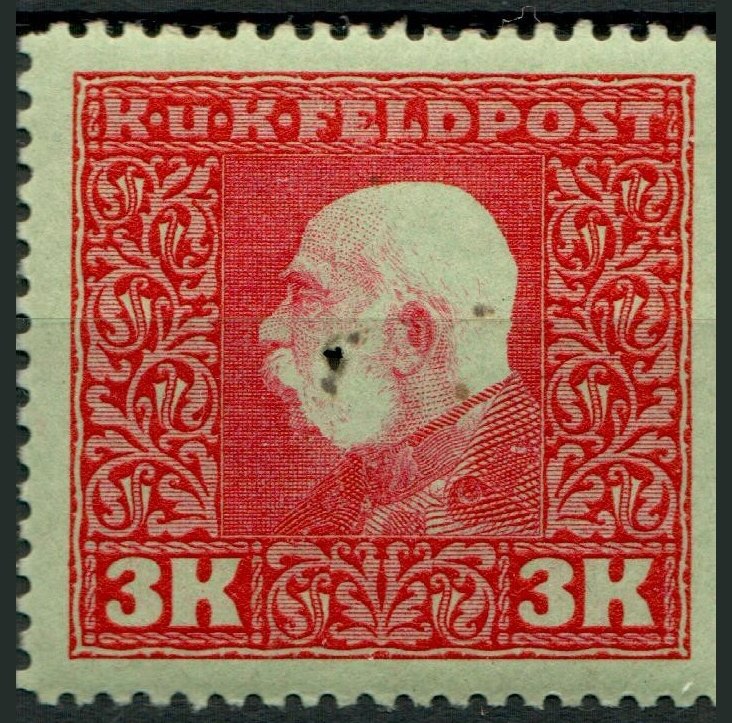
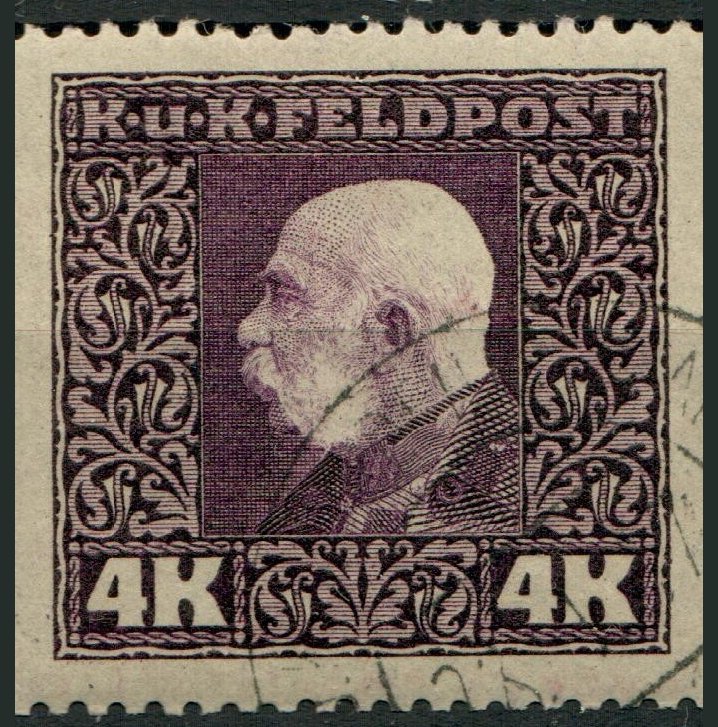
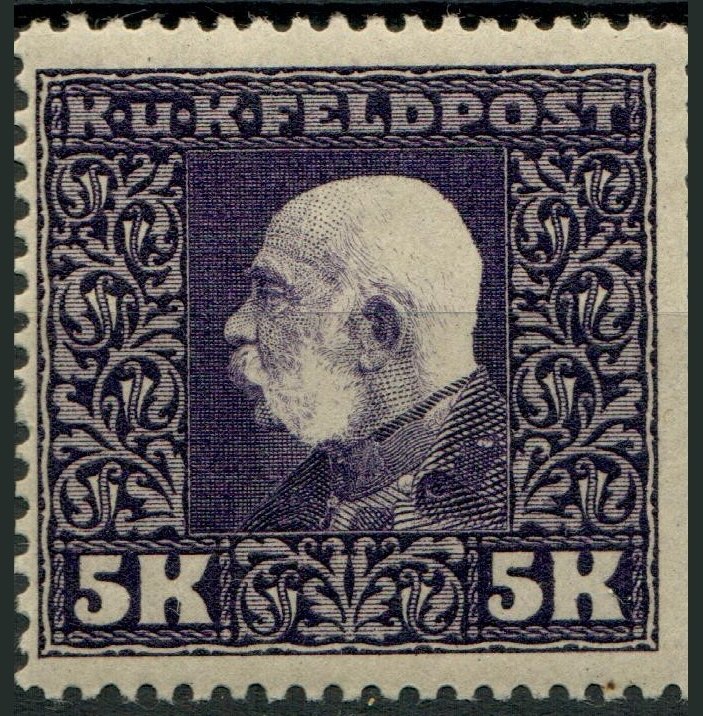
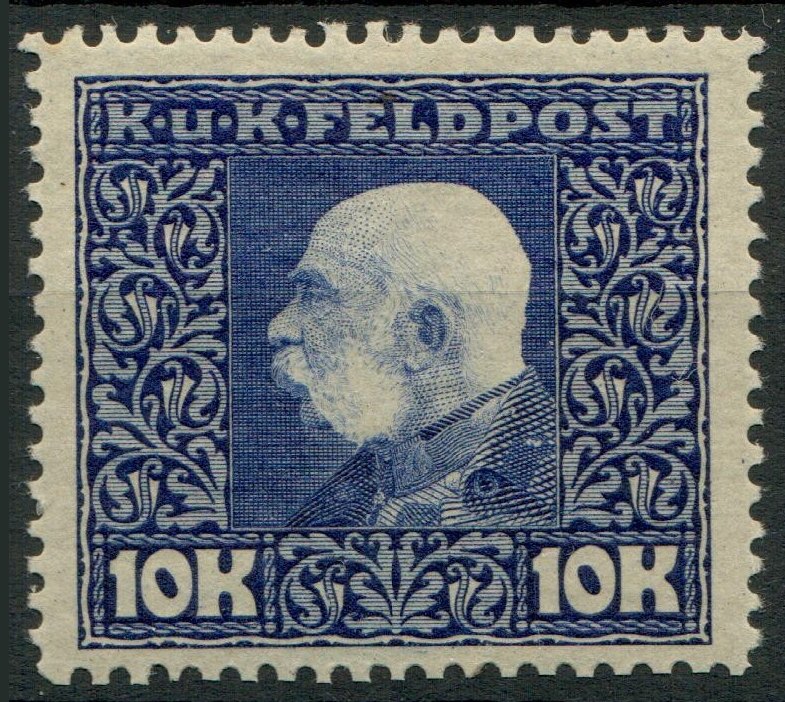
1915–1917 Emperor Franz Joseph - Inscription: "K u K FELDPOST"
Perforation
12½
About this issue
The Austro-Hungarian field post (Feldpost) issued its own stamps from 1915 for territory held by the army. The first, in March 1915, were Bosnian stamps of 1912 overprinted 'K.U.K. FELDPOST'; they were soon replaced by this Franz Joseph series inscribed 'K u K FELDPOST' – kaiserlich und königlich, imperial and royal. The same stamps were later overprinted for Serbia and Montenegro.
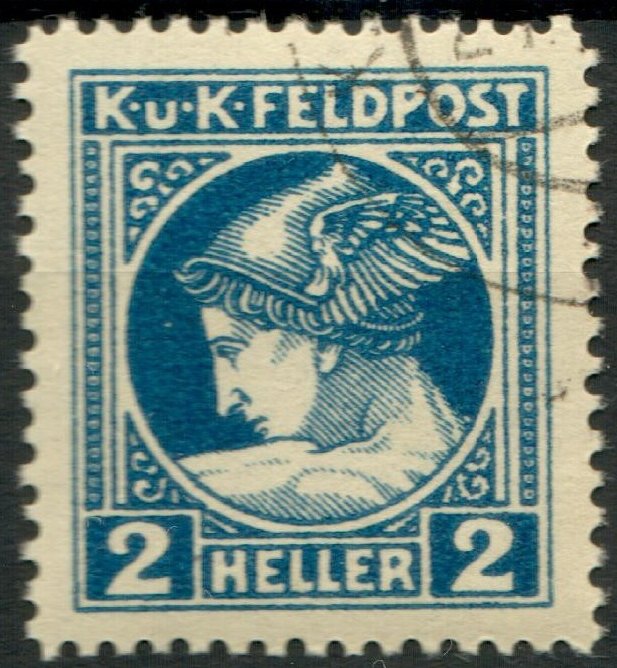
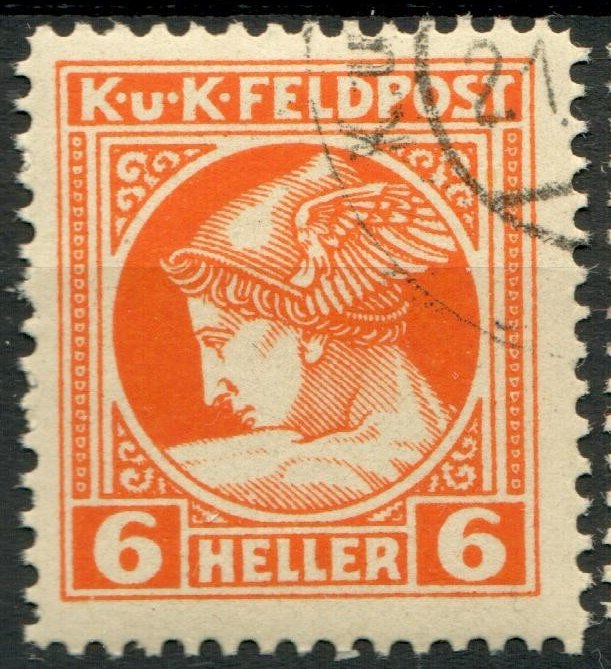
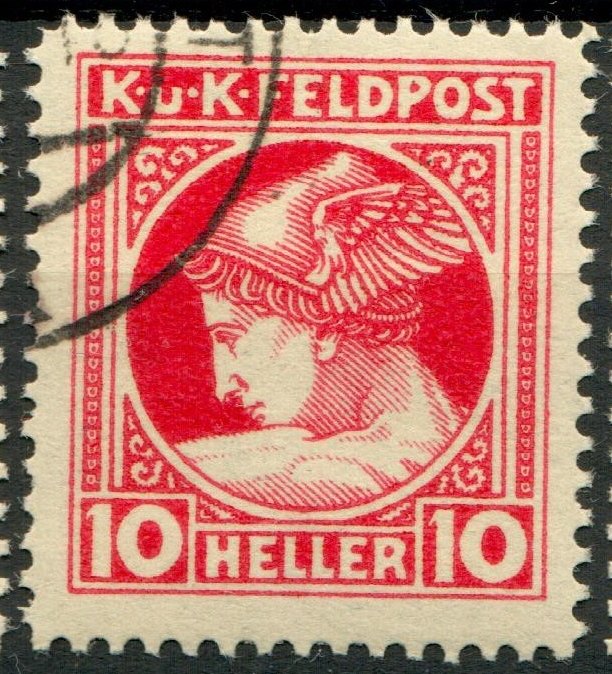
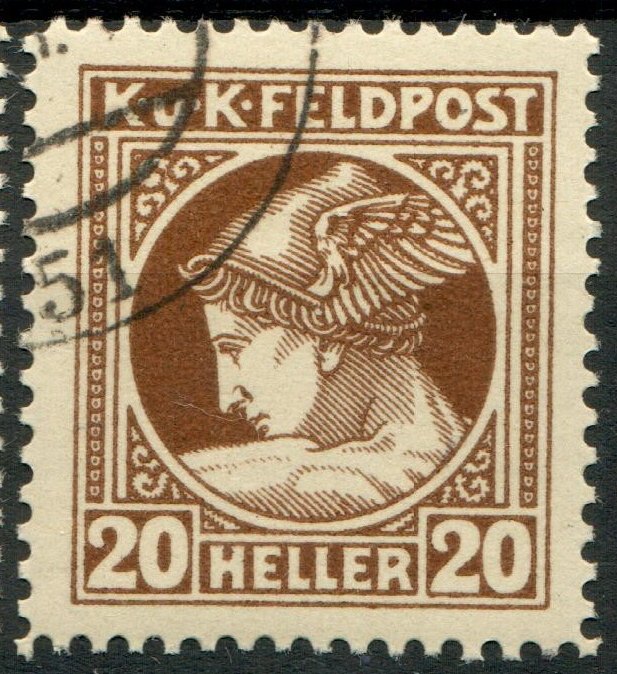
The field-post newspaper stamps, with the head of Mercury, god of commerce, facing left, were designed by Koloman Moser and engraved by Ferdinand Schirnböck. Newspaper stamps were meant for posting newspapers and were available only to publishers. Mercury had been the emblem of Austrian newspaper stamps since 1851.
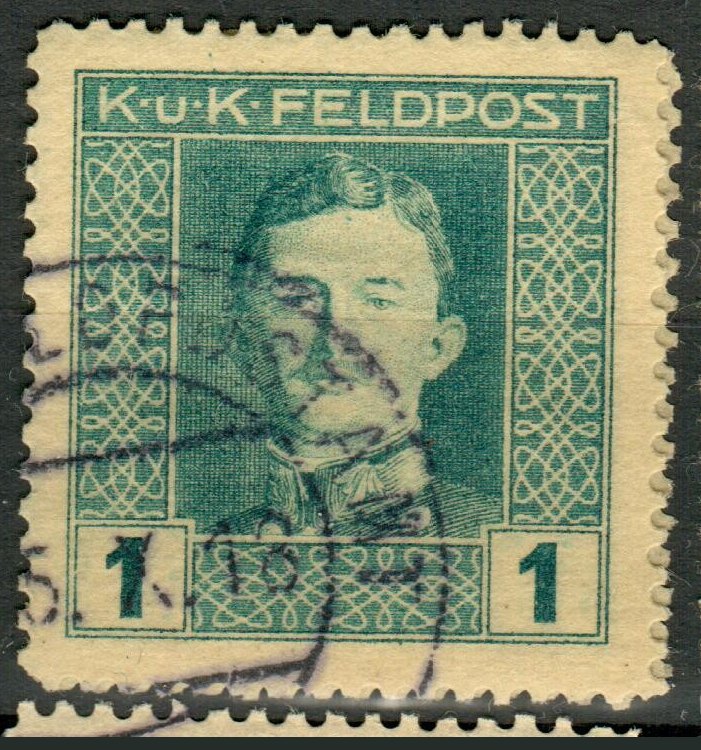
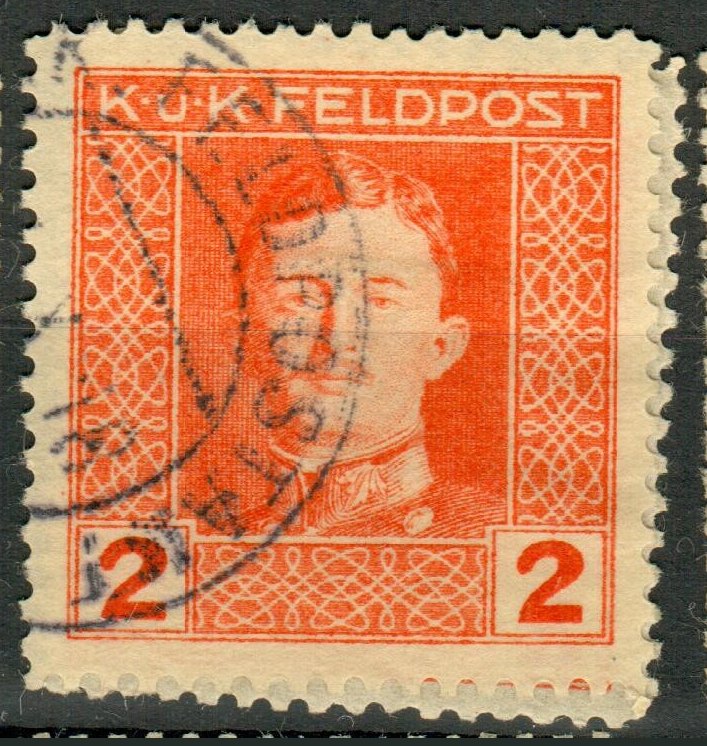
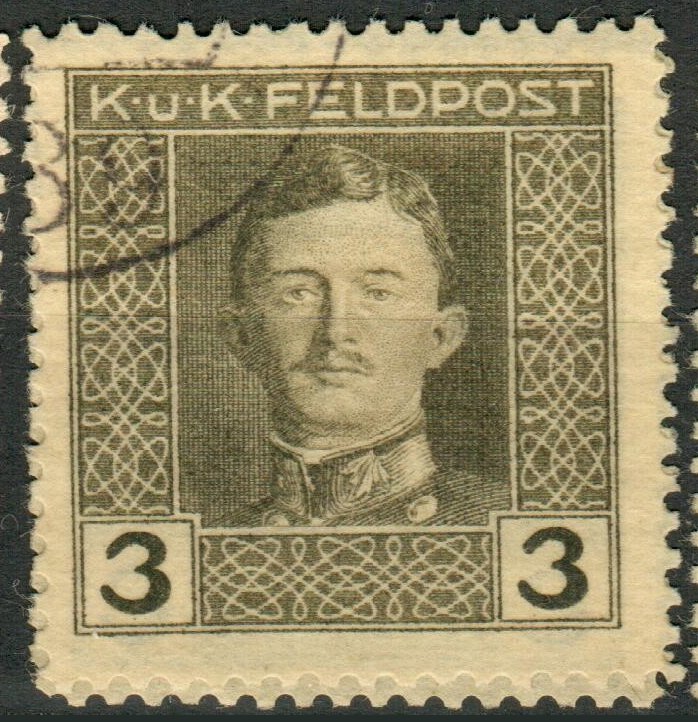
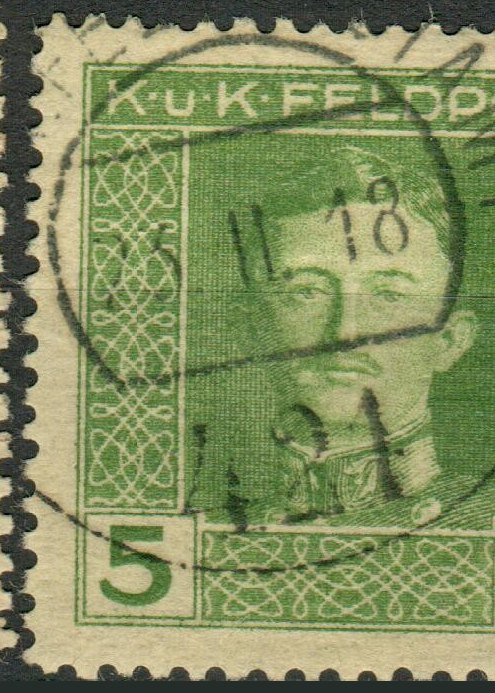
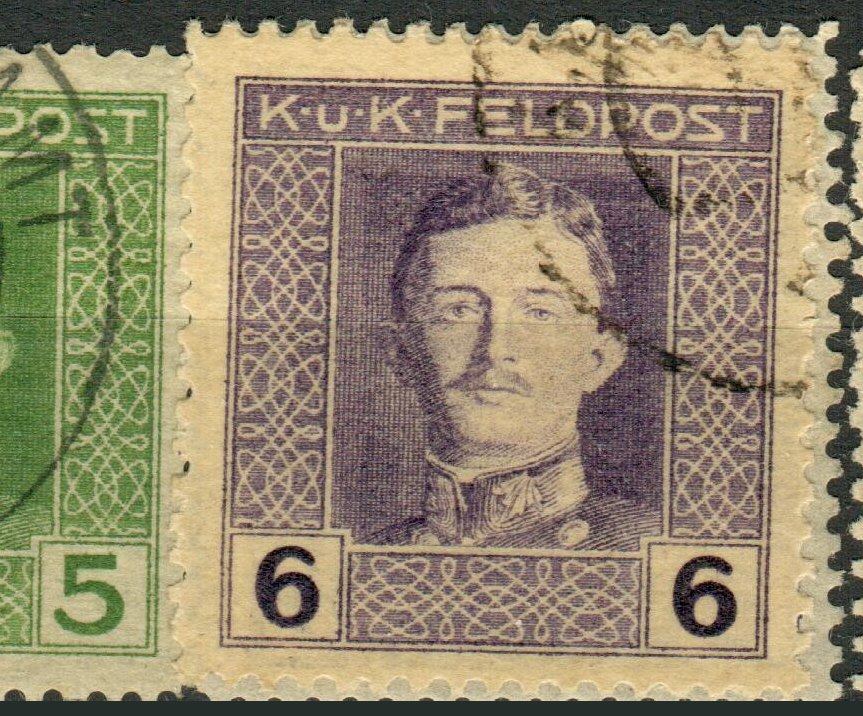
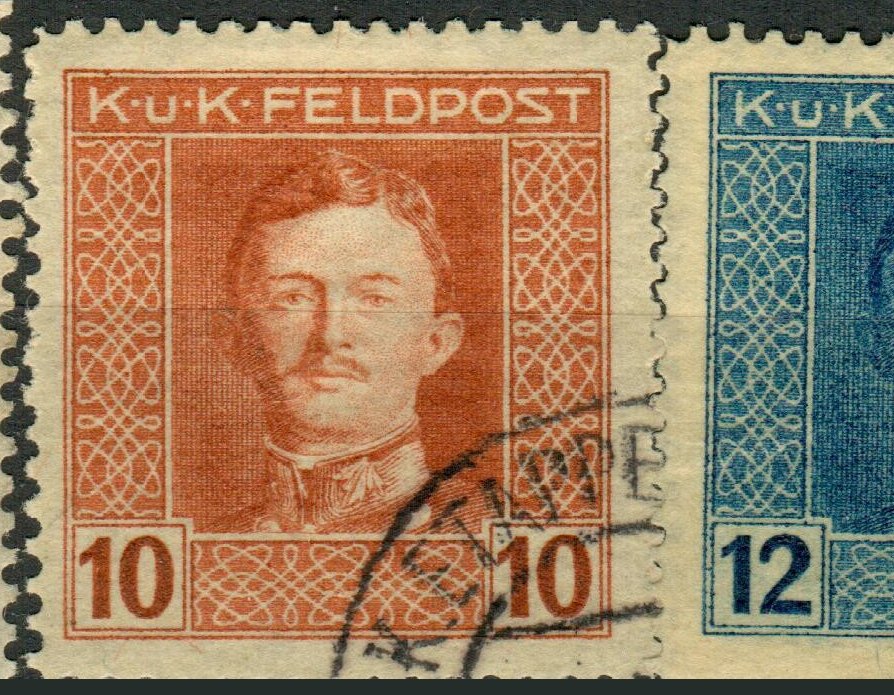
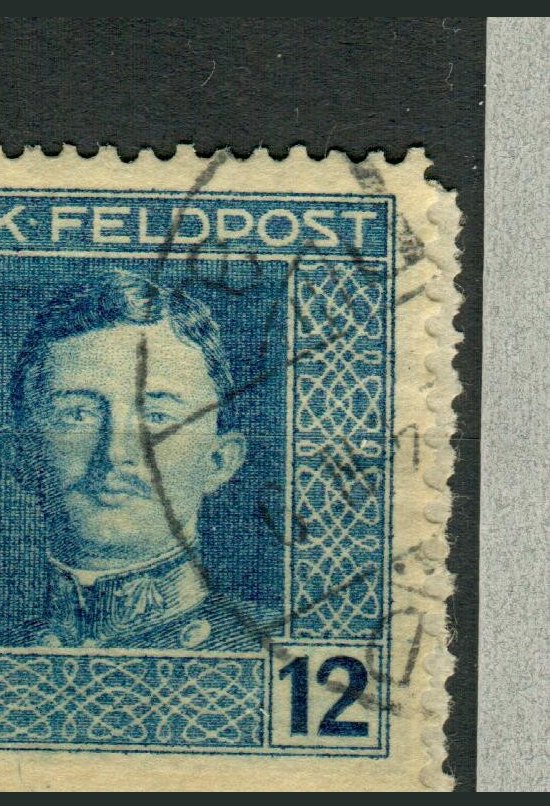
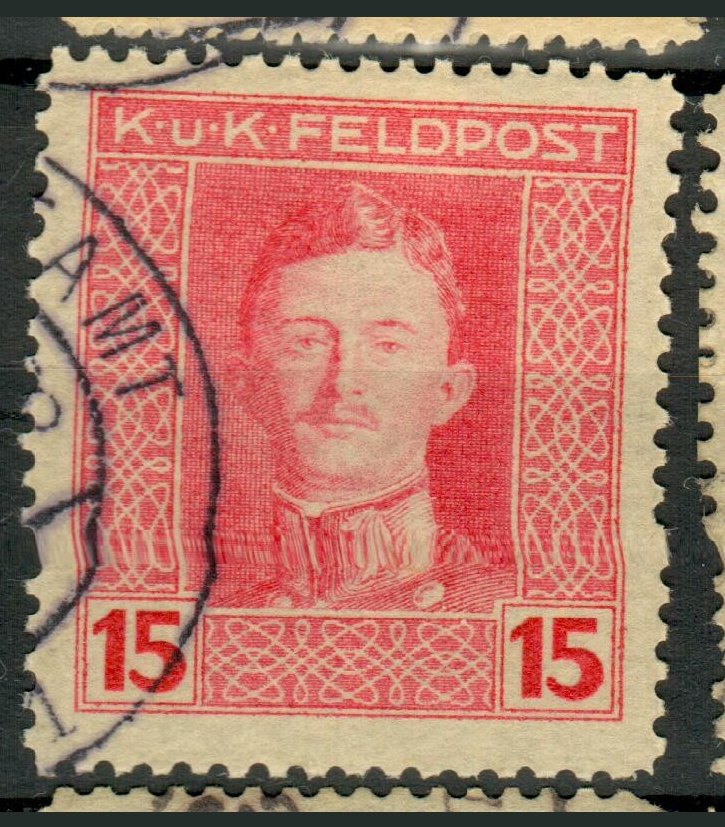
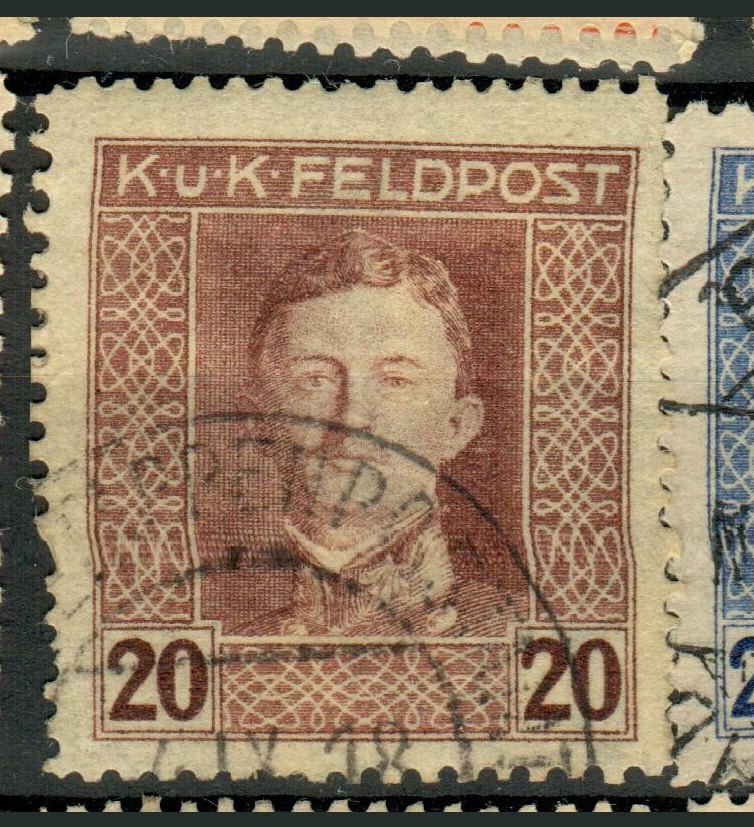
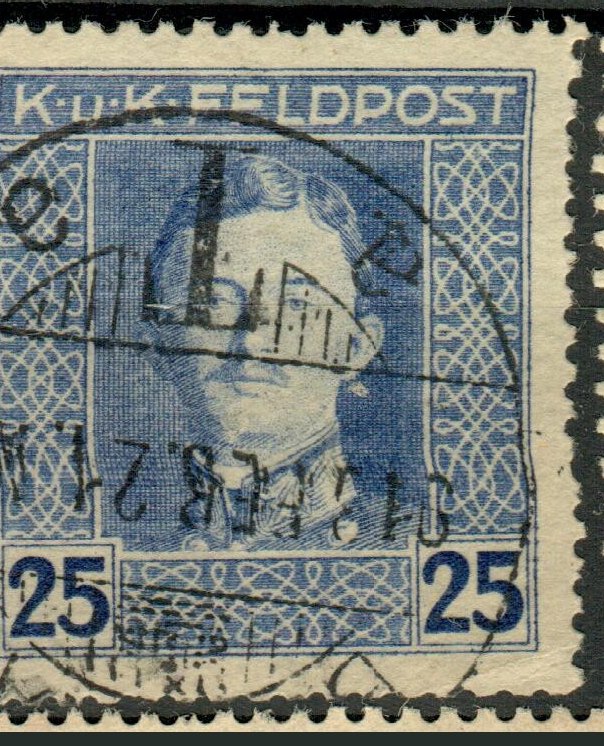
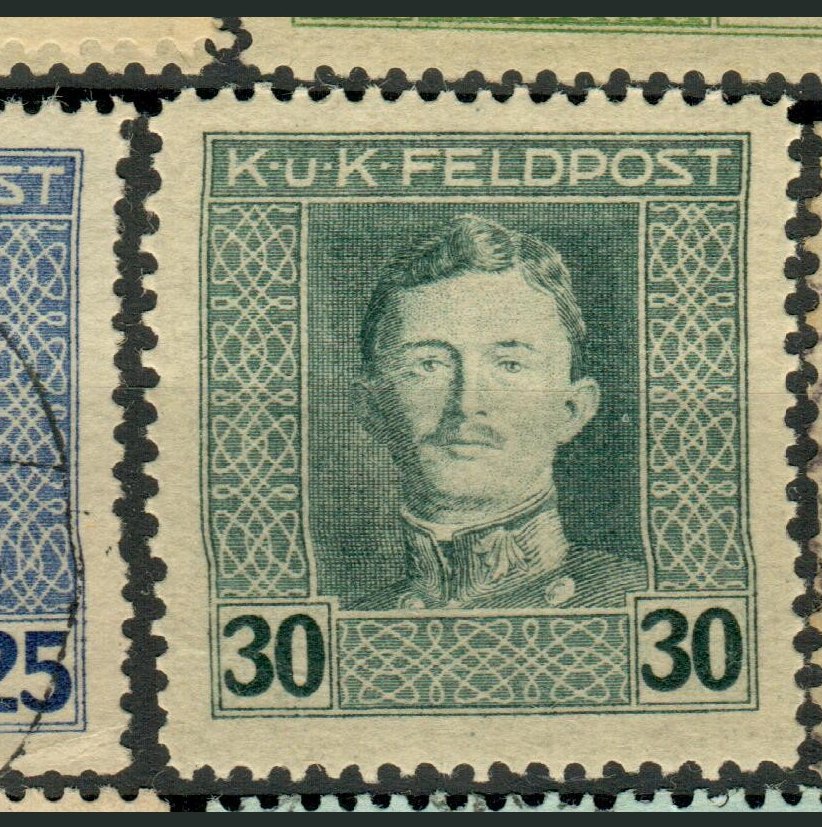
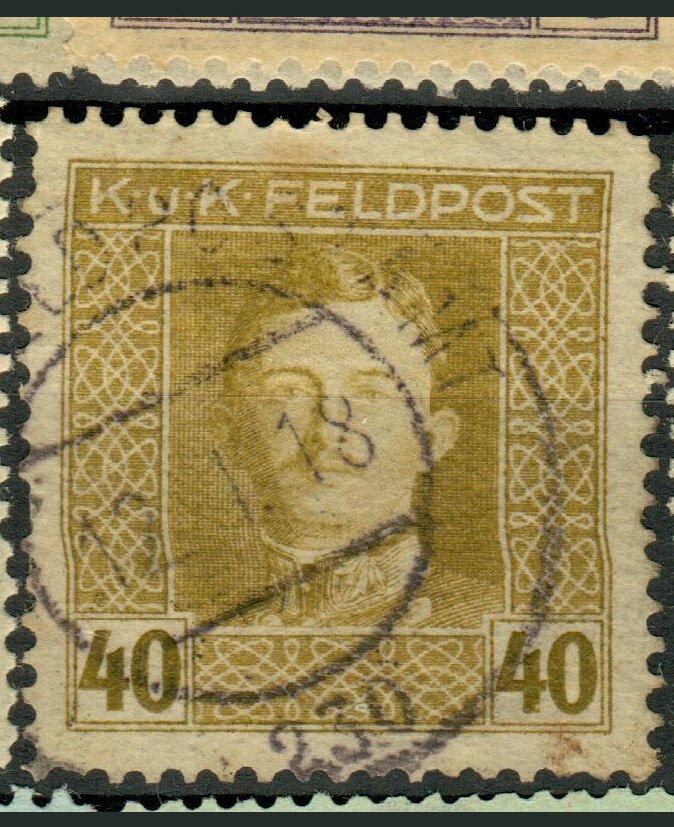
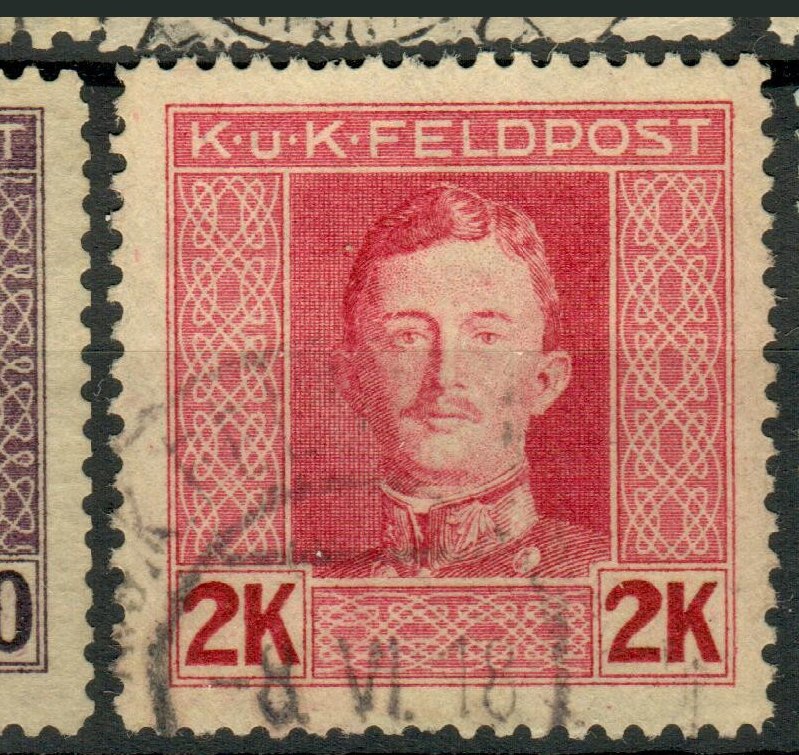
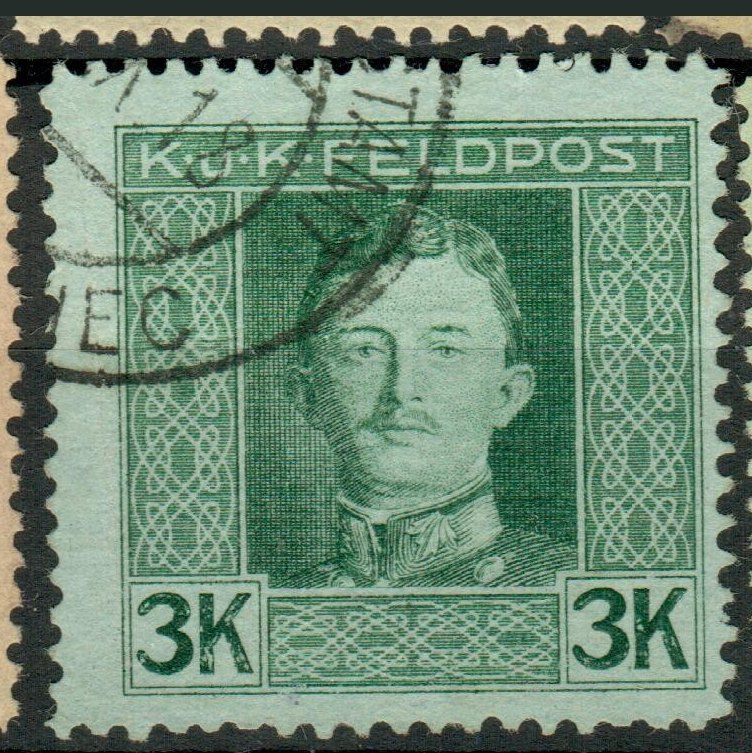
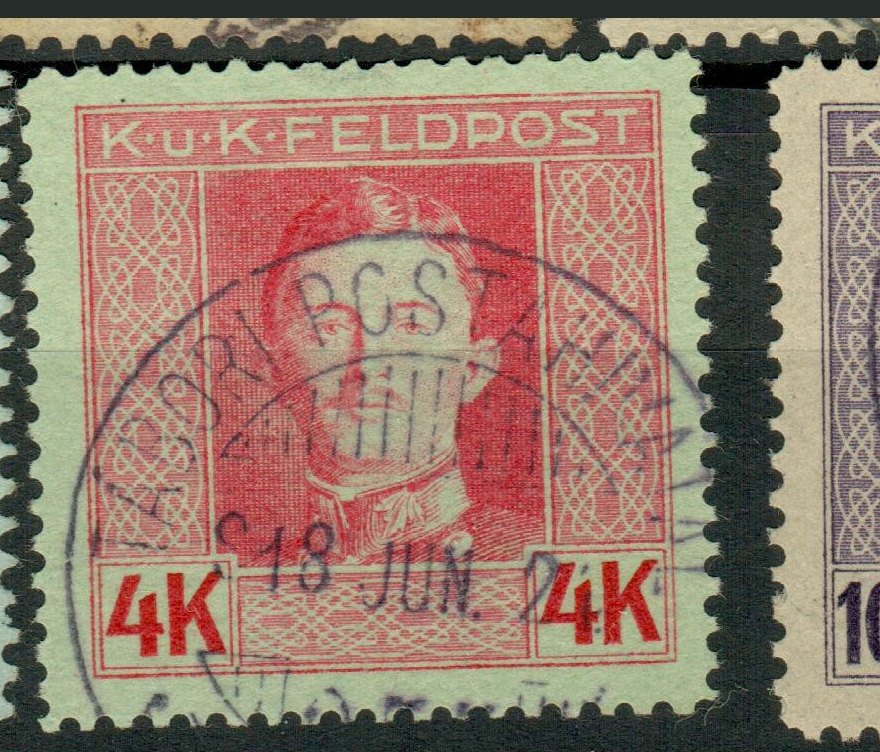
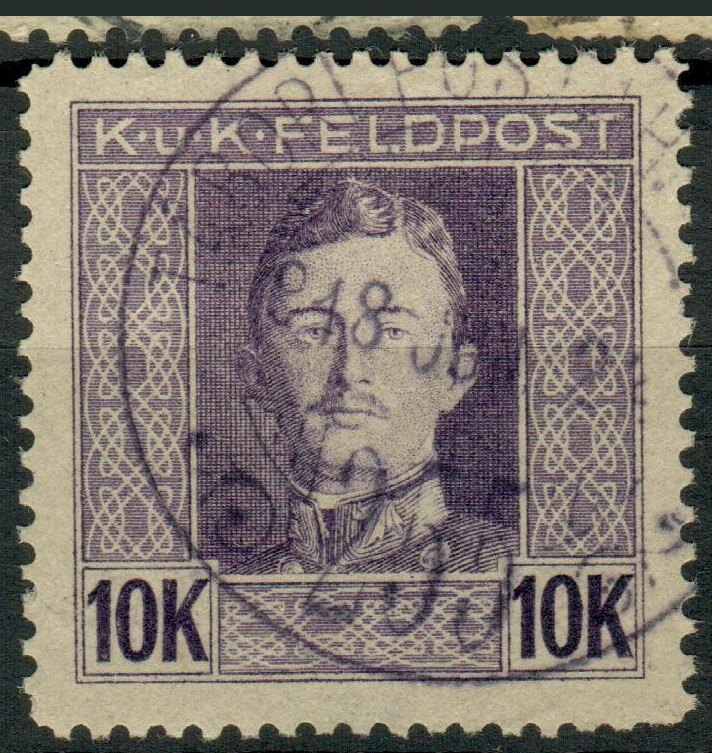
Franz Joseph died on 21 November 1916 after almost 68 years on the throne and was succeeded by his great-nephew Karl I. In 1917 the field post therefore issued a new series with Karl's profile between ornamental columns. The stamps for occupied Romania used the same design, with a blank bottom panel for the value in bani and lei.
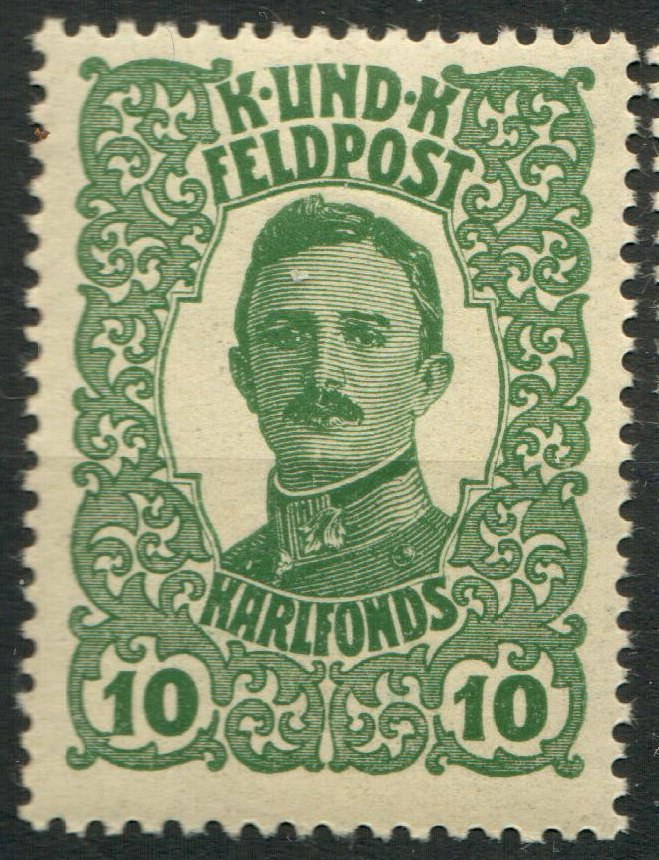
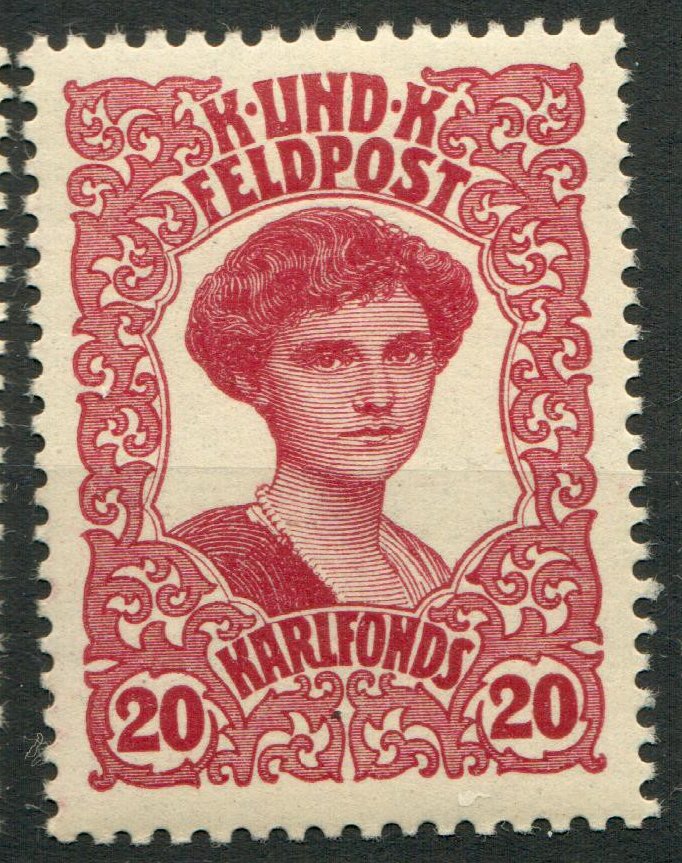
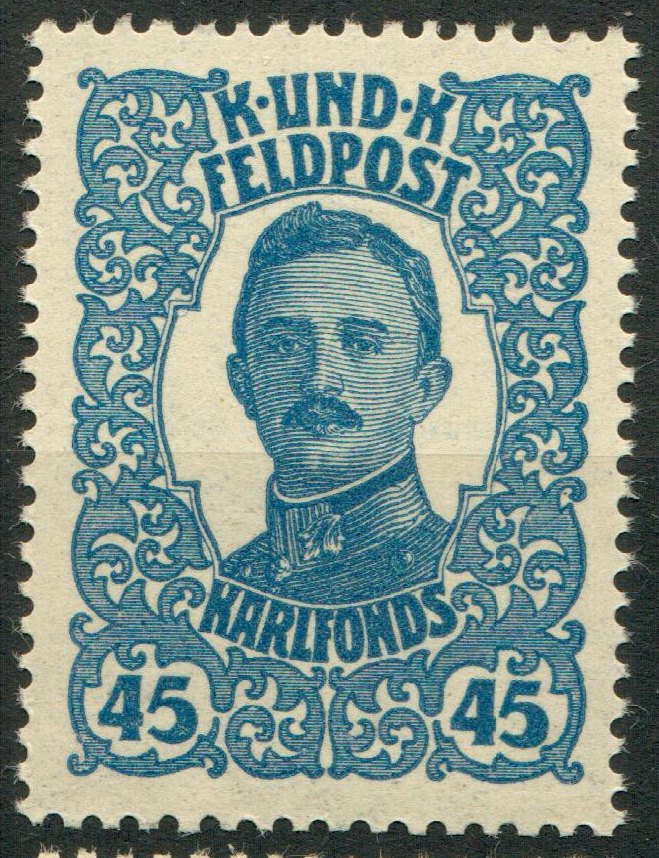
In 1918 the field post issued three charity stamps inscribed K UND K FELDPOST and KARLFONDS – 10, 20 and 45 heller, each with a 10-heller surcharge for the Karl Fund. Bosnia received a similar trio in July 1918, with portraits of Karl I and Empress Zita by Alfred Cossmann; the proceeds went to victims of the war.
In the autumn of 1918 a new field-post definitive set with Karl I was ready, similar in design to the Karlfonds charity stamps. It never reached the army post offices – the war ended first – so catalogues list it as unissued.