Stamps and Stories Great Britain, Austria-Hungary and Czechoslovakia to 1945

Revenue stamps

Great Britain – embossed duty stamps · 10 stamps

Value●○○○○Common< 5●●○○○Low5 – 50●●●○○Medium50 – 500●●●●○High500 – 5 000●●●●●Exceptional5 000 +left column mint, right column used · USD, catalogue

1720

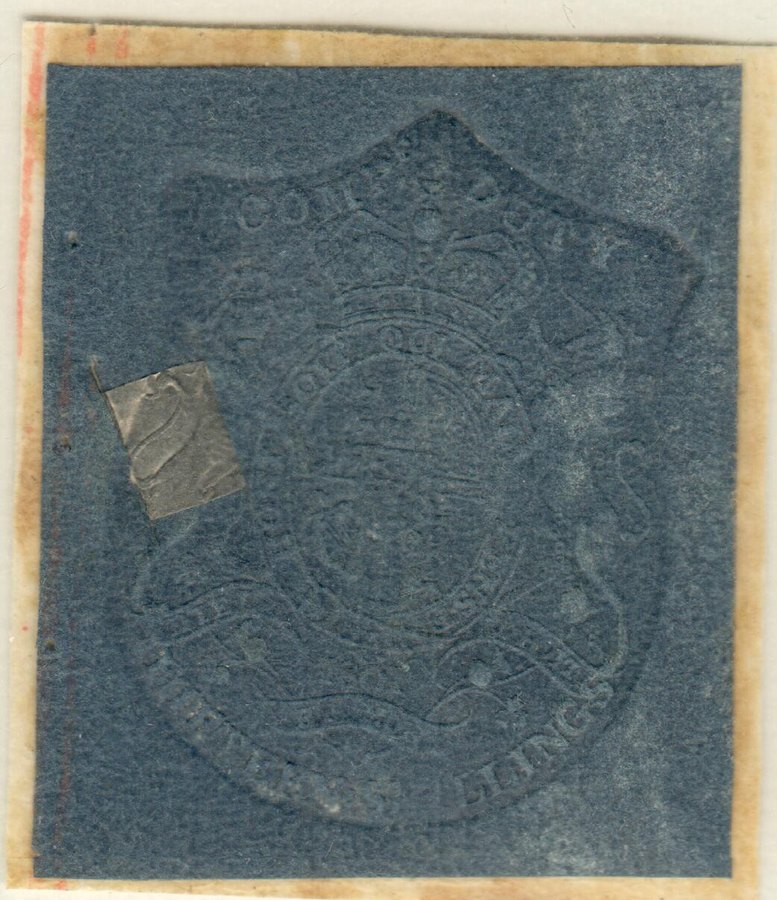
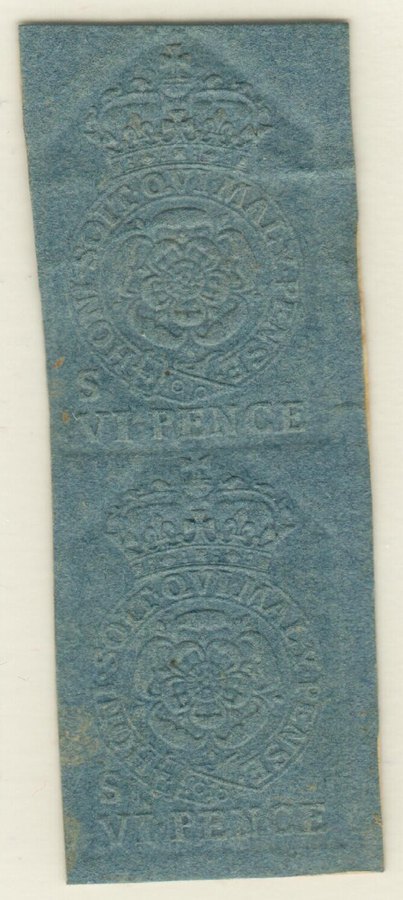
1720–1759 Sixpence - crown over a Tudor rose in the Garter

About this issue

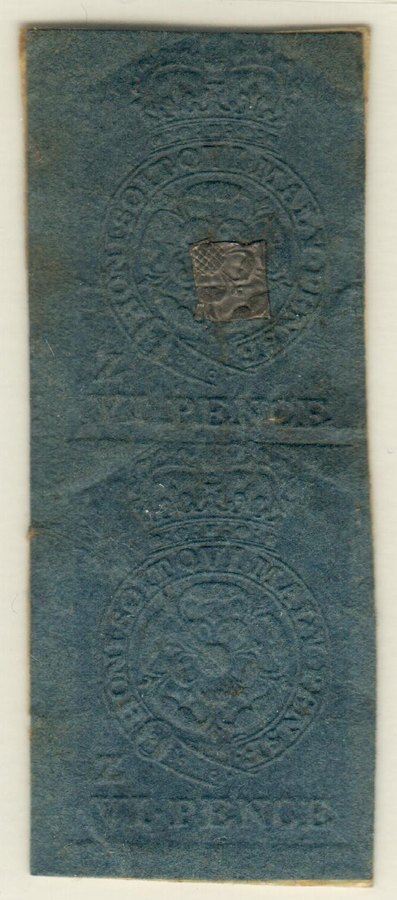
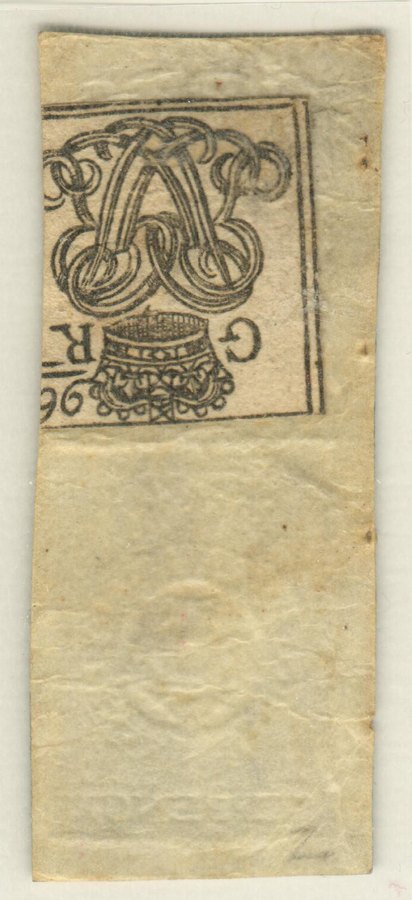
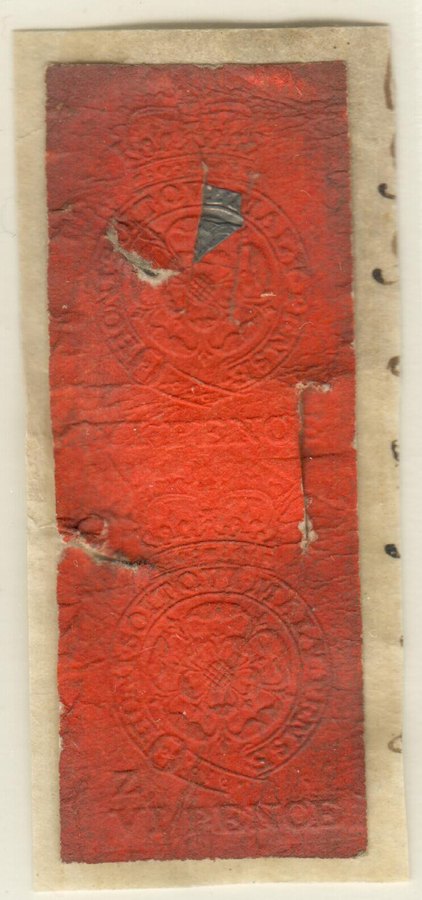
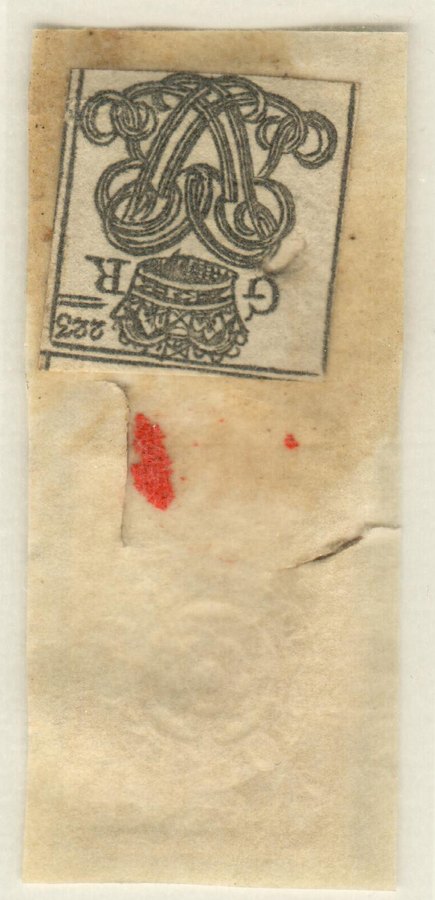
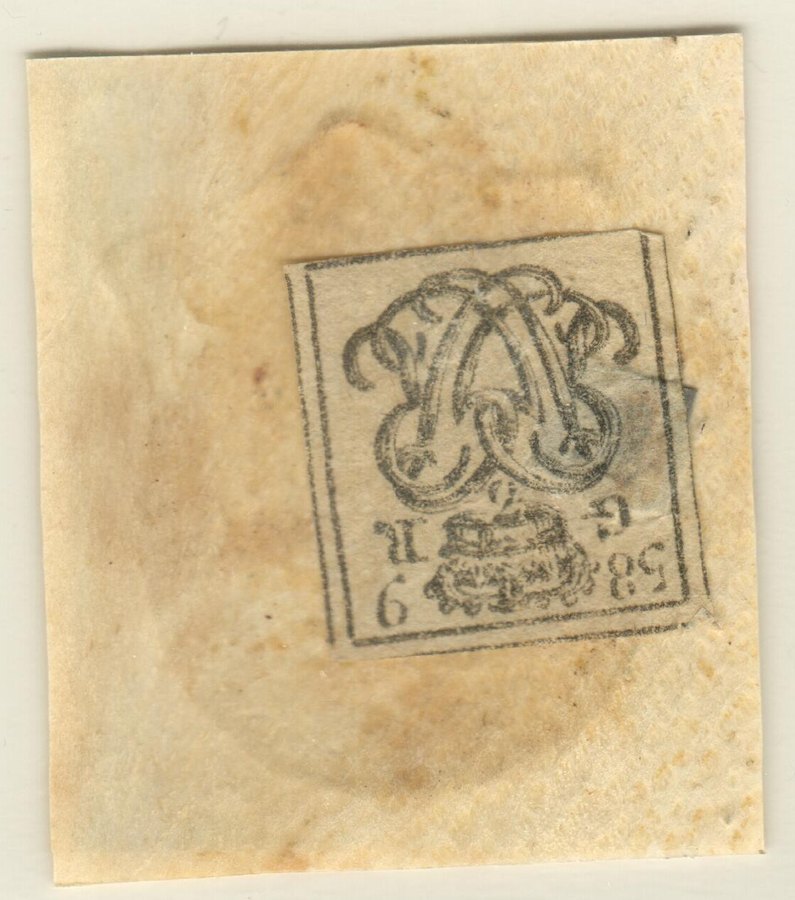
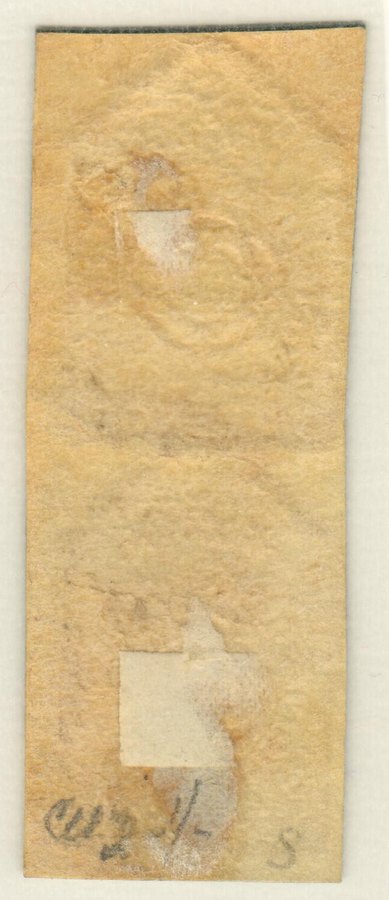
Sixpence was one of the rates of the first Stamps Act, in force from 28 June 1694, and the Act required a separate stamp for each rate so that one could not be altered into another. On parchment an embossing faded as the skin moved, and a stamp on glued paper could be peeled off and used again, so from 1701 a strip of tin was passed through two slits in the paper and the document, its ends covered at the back by a printed label with the royal cypher, and the stamp was embossed last, locking it all together. The labels were printed from engraved copper plates with every position numbered, and a worn plate was recut and marked: George II's plate, in use from 1731 to 1764, has one short line at top right, beside the number, after its first recut (seen 1738–1746) and two after its second (1740–1759), as on R3. Blue paper was the usual colour; red, as on R3, was among the others used. The letters S, Z and CC name the die – Walter Morley's 1911 catalogue lists sixpenny dies running on into doubled letters such as CC.

Sources: legislation.gov.uk: Stamps Act 1694 (as enacted), Wikipedia: Revenue stamps of the United Kingdom, GBPS: Embossed Duty Stamps – Cypher Labels, Stampboards: UK Royal Cypher Labels, 1701–1922, Photomacrography.net: Embossed escutcheons on revenue stamps, Walter Morley: The Embossed Revenue Stamps of Great Britain and Ireland (1911)
No. R1
R1
No. R1, reverse
R1 · reverse
No. R2
R2
No. R2, reverse
R2 · reverse
No. R3
R3
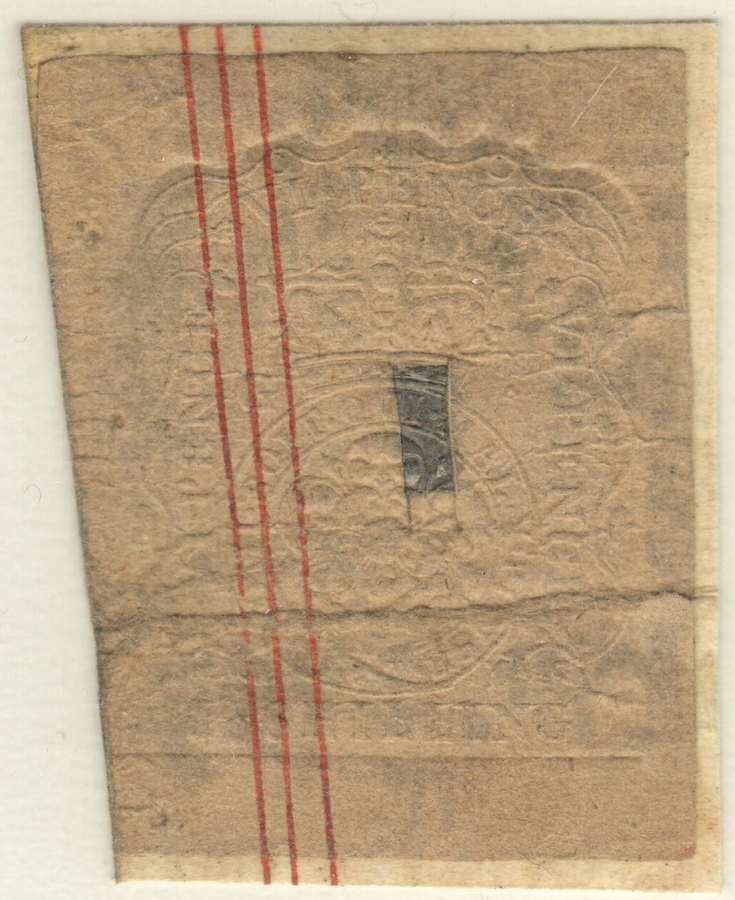
No. R3, reverse
R3 · reverse
No. R4
R4
No. R4, reverse
R4 · reverse
No.TypeValueColourDescriptionPrintedMintUsed
R16dblueVertical pair, die letter S; the cypher labels are missing. Collector's note: die 1720–1749
R26dblueVertical pair, die letter Z. Cypher label GR, position 96, recut line beside the number (label trimmed at the right). Collector's note: die 1729–1749, label 1740–1759
R36dredVertical pair on red paper, die letter Z. Cypher label GR, position 223, two lines beside the number: George II's plate, second recut, 1740–1759. Collector's note: die 1729–1749, label 1740–1759
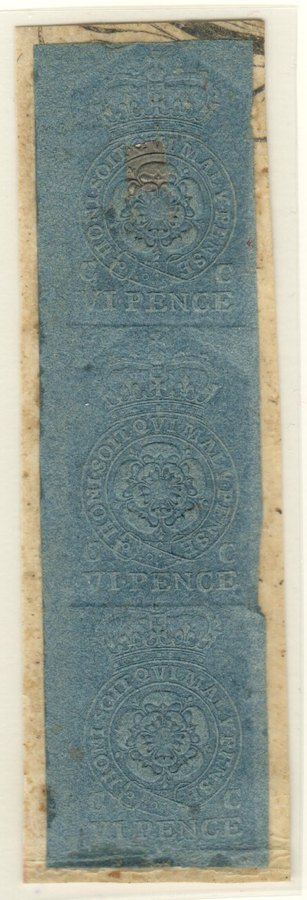
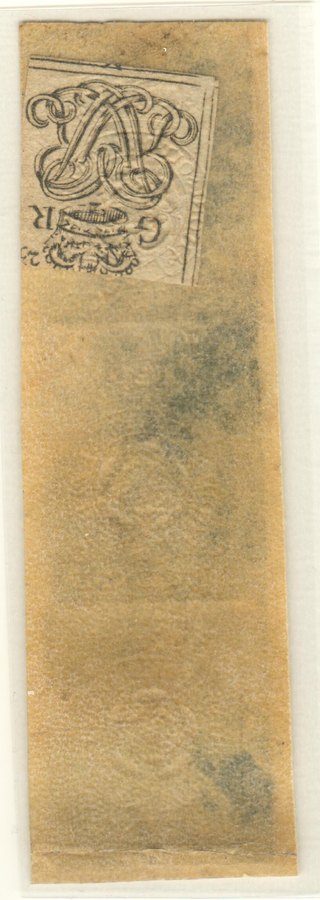
R46dblueVertical strip of three on a piece of the document, die letters C C. Cypher label GR, position trimmed. Collector's note: die 1736–1758, label 1731–1739

1757

1757–1779 Two shillings and sixpence - composite die, one shilling and three sixpences

About this issue

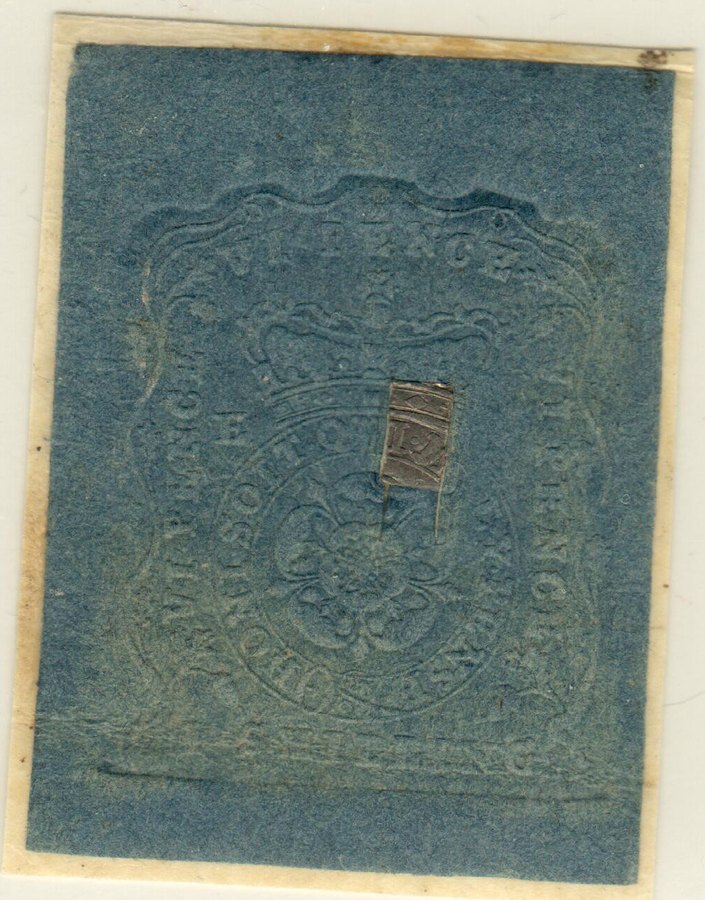
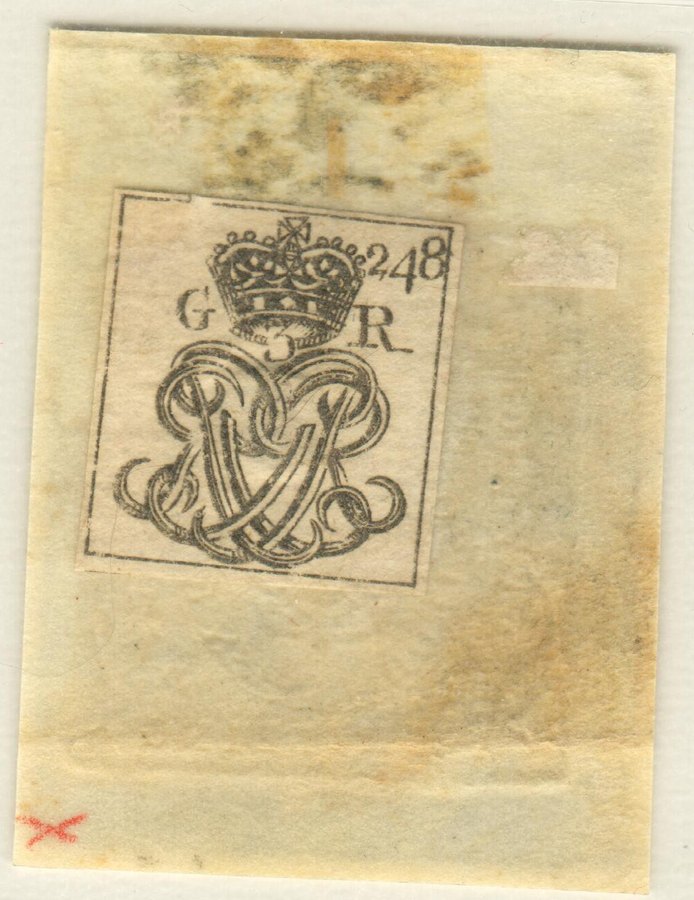
A composite die: the design is framed by I SHILLING at the foot and VI PENCE on the other three sides, and Walter Morley's 1911 catalogue lists exactly this combination – a shilling and three sixpences – among the two-and-sixpenny dies, lettered from A onwards; the collector's notes read 1s 6d. The backs carry labels from George III's first cypher plate, numbered 1 to 320 with a 3 under the crown; neither shows a recut mark, which places both in the plate's original state, used from April 1762 to May 1773. The same duty on the same blue paper as R5 crossed the Atlantic under the Stamp Act of 1765: the Smithsonian's National Postal Museum holds a 2s 6d stamp of that Act on blue paper, stapled to vellum, and the tax met such resistance in the American colonies that it was repealed the following year.

Sources: Walter Morley: The Embossed Revenue Stamps of Great Britain and Ireland (1911), Stampboards: UK Royal Cypher Labels, 1701–1922, Smithsonian National Postal Museum: Stamp from the Stamp Act of 1765, Wikipedia: Stamp Act 1765

No. R5
R5
No. R5, reverse
R5 · reverse
No. R6
R6
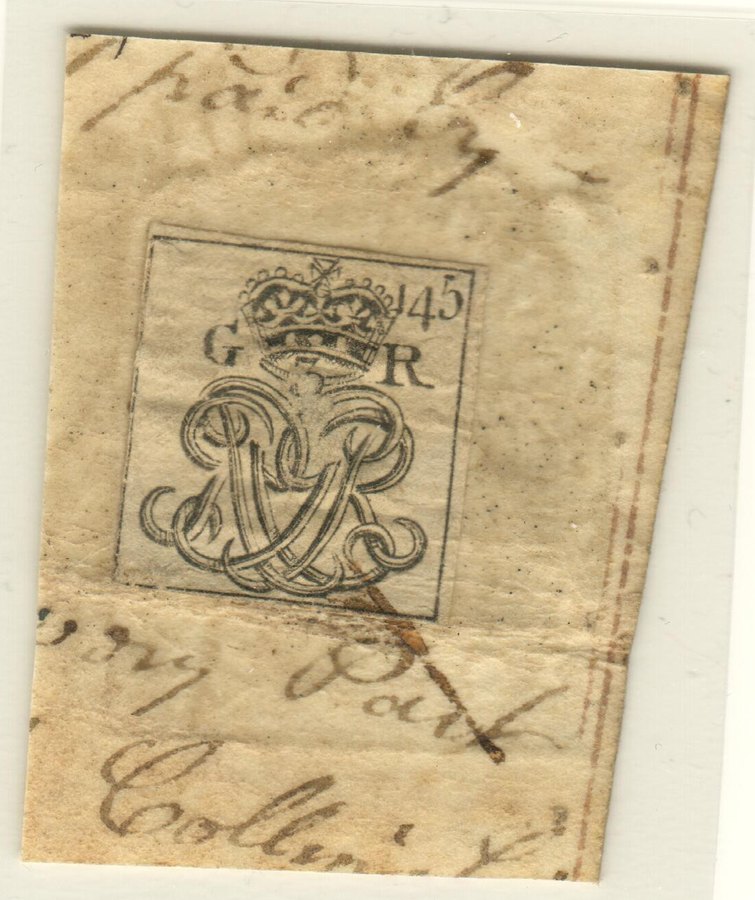
No. R6, reverse
R6 · reverse
No.TypeValueColourDescriptionPrintedMintUsed
R52s 6dblueDie letter E. Cypher label G III R, position 248, no recut marks: George III's first plate, original state, 1762–1773. Collector's note: 1s 6d, die 1757–1772, label 1762–1773
R62s 6dbuffOn buff paper crossed by red ruled lines; handwriting of the document on the back. Cypher label G III R, position 145, no recut marks: first plate, original state, 1762–1773. Collector's note: 1s 6d, die G 1764–1779, label 1762–1773

1786

1786–1798 Composite die - values round a crown over a Tudor rose

About this issue

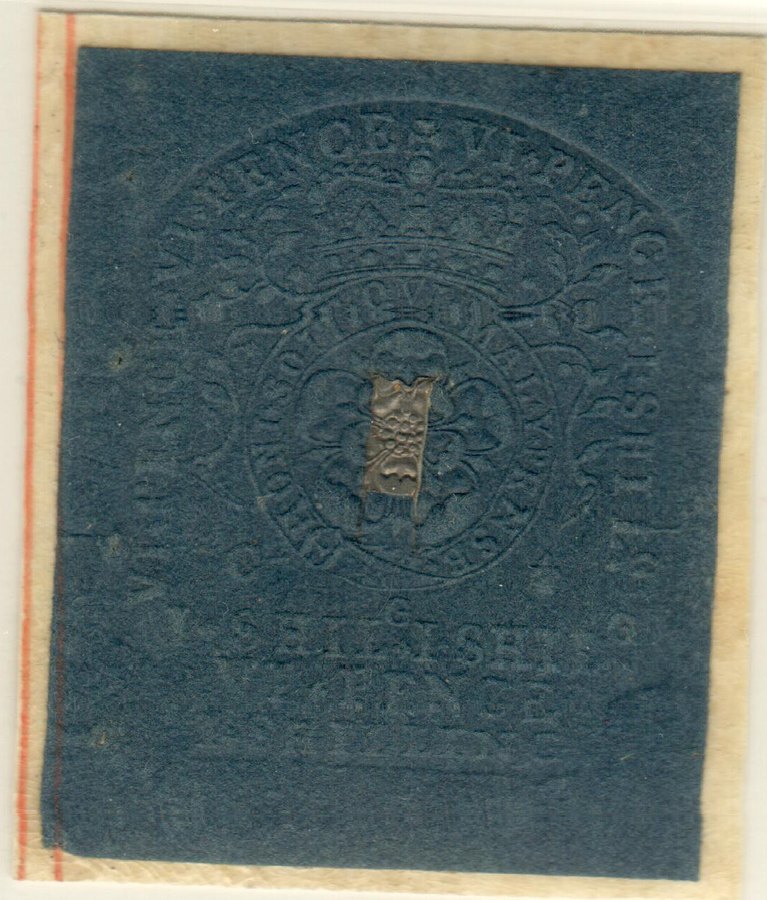
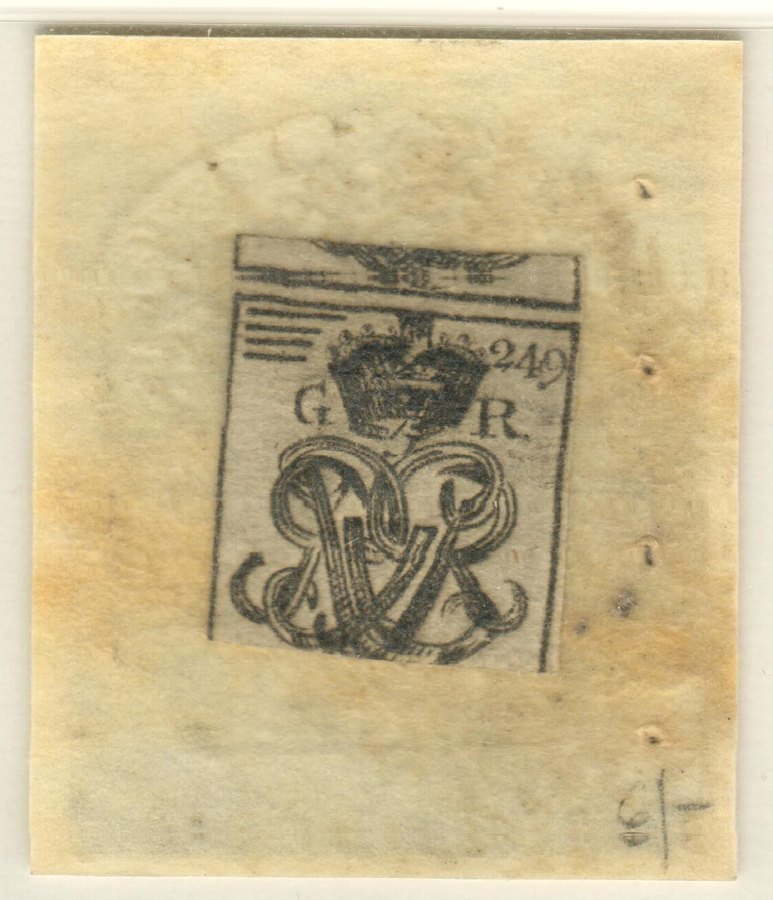
Another composite die, with its values running round a crown over a Tudor rose: VI PENCE twice across the top, and I SHILLING and more sixpences on the sides and at the foot. The embossing is too worn to add them up with confidence, so the value is left open here. The cypher label is the clearest dating evidence among these duty stamps: position 249 on George III's first plate, with four short lines at top left – the mark of the plate's fourth and last recut, which followed the third, normally used up to 1790, and was itself replaced by the second plate in February 1797. The edge of the next label on the plate is still attached above it.

Sources: Stampboards: UK Royal Cypher Labels, 1701–1922, GBPS: Embossed Duty Stamps – Cypher Labels

No. R7
R7
No. R7, reverse
R7 · reverse
No.TypeValueColourDescriptionPrintedMintUsed
R7blueDie letter G; VI PENCE and I SHILLING round the design, the total not legible. Cypher label G III R, position 249, four lines at top left: first plate, fourth recut, about 1790 – February 1797. Collector's note: 1s 6d, die 1786–1798, label 1790–1800

1801

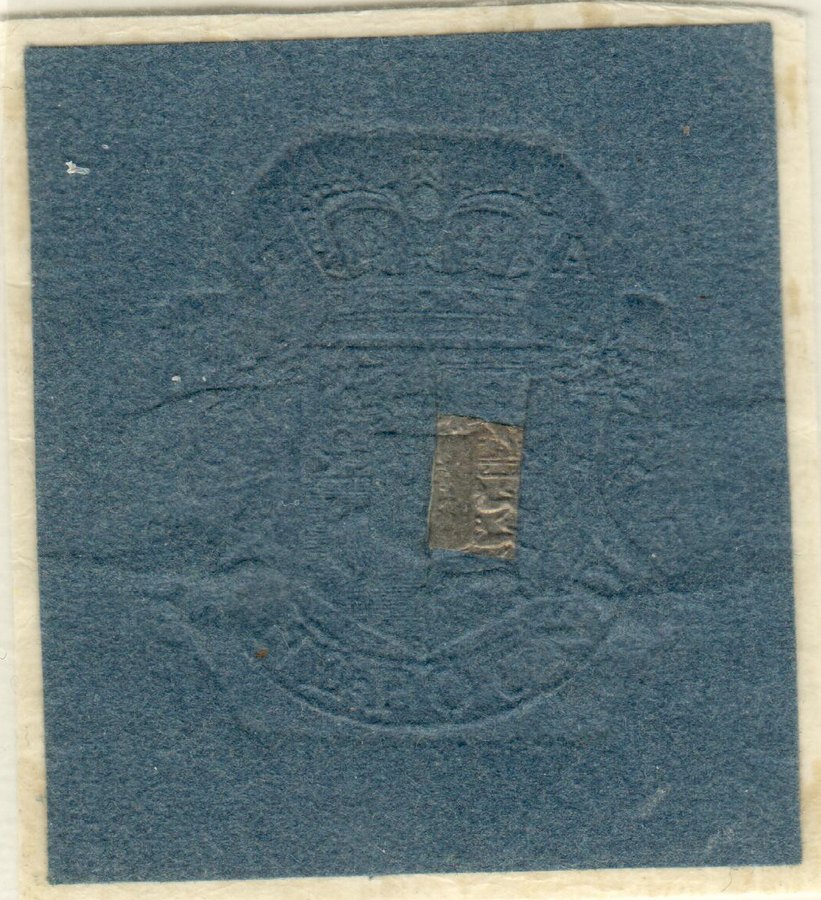
1801–1828 Fifteen shillings - Compt. Duty

About this issue

The die reads COMPT. DUTY at the top and FIFTEEN SHILLINGS at the foot, and Walter Morley's 1911 catalogue lists a Compt. Duty fifteen shillings of 1801, die A, followed by dies B and C – which fits the collector's die A of 1801; what Compt. abbreviates, the catalogue does not say. The label is from George III's second cypher plate, introduced in February 1797 and numbered 321 to 640, on which the number is split either side of the crown, so 58 and 9 read as position 589. With no recut marks it is in the plate's original state, used until November 1809.

Sources: Walter Morley: The Embossed Revenue Stamps of Great Britain and Ireland (1911), Stampboards: UK Royal Cypher Labels, 1701–1922

No. R8
R8
No. R8, reverse
R8 · reverse
No.TypeValueColourDescriptionPrintedMintUsed
R815sblueCOMPT. DUTY at the top, FIFTEEN SHILLINGS at the foot. Cypher label G III R, position 589 (58 | 9 either side of the crown), no recut marks: George III's second plate, original state, February 1797 – November 1809. Collector's note: die A 1801–1828, label 1797–1809

1821

1821–1835 Crown over a shield in the Garter

About this issue

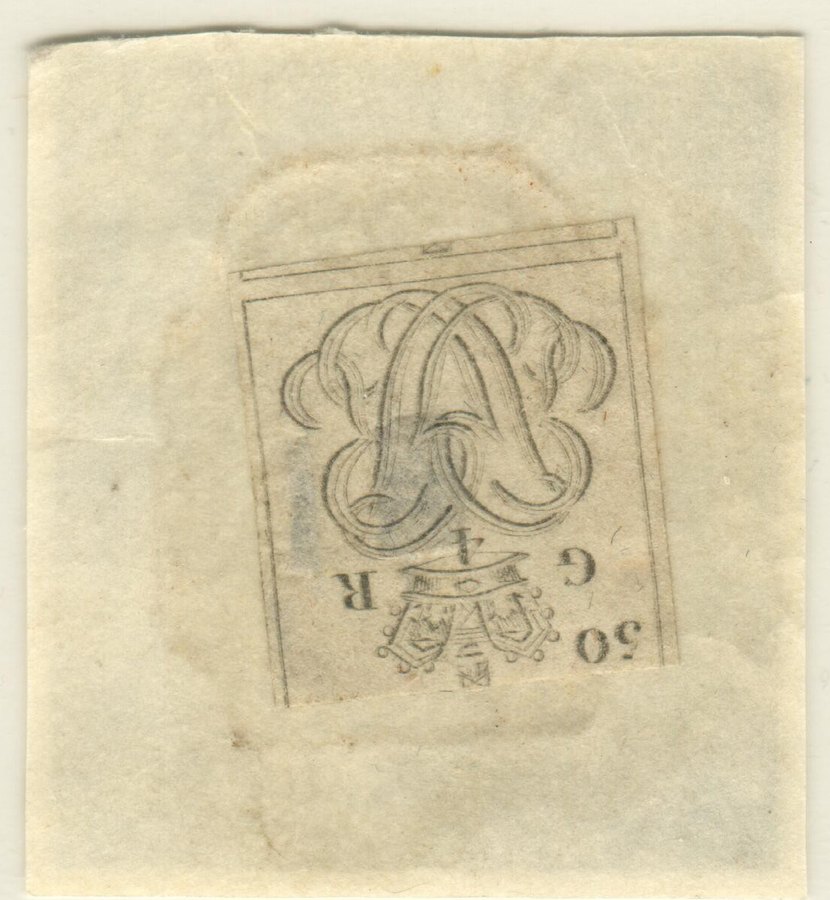
On the back is George IV's cypher, G IV R with the 4 under the crown, at position 50. The Great Britain Philatelic Society's display of cypher labels shows that this plate was not retired when the king died in 1830 but recut and used again under William IV. The value on the front is not legible in the scan; the collector's note gives £1, die A.

Sources: GBPS: Embossed Duty Stamps – Cypher Labels

No. R9
R9
No. R9, reverse
R9 · reverse
No.TypeValueColourDescriptionPrintedMintUsed
R9blueValue not legible. Cypher label G IV R, position 50: George IV. Collector's note: £1, die A 1821–1835, label 1824–1835

1837

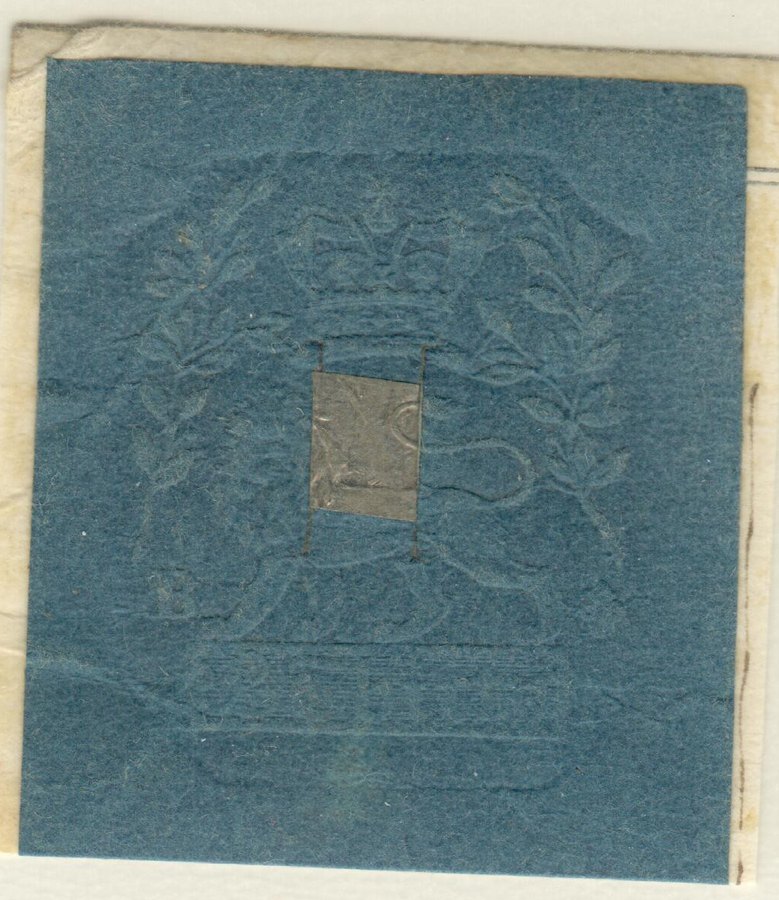
1837–1844 Crown and laurel sprays - Queen Victoria

About this issue

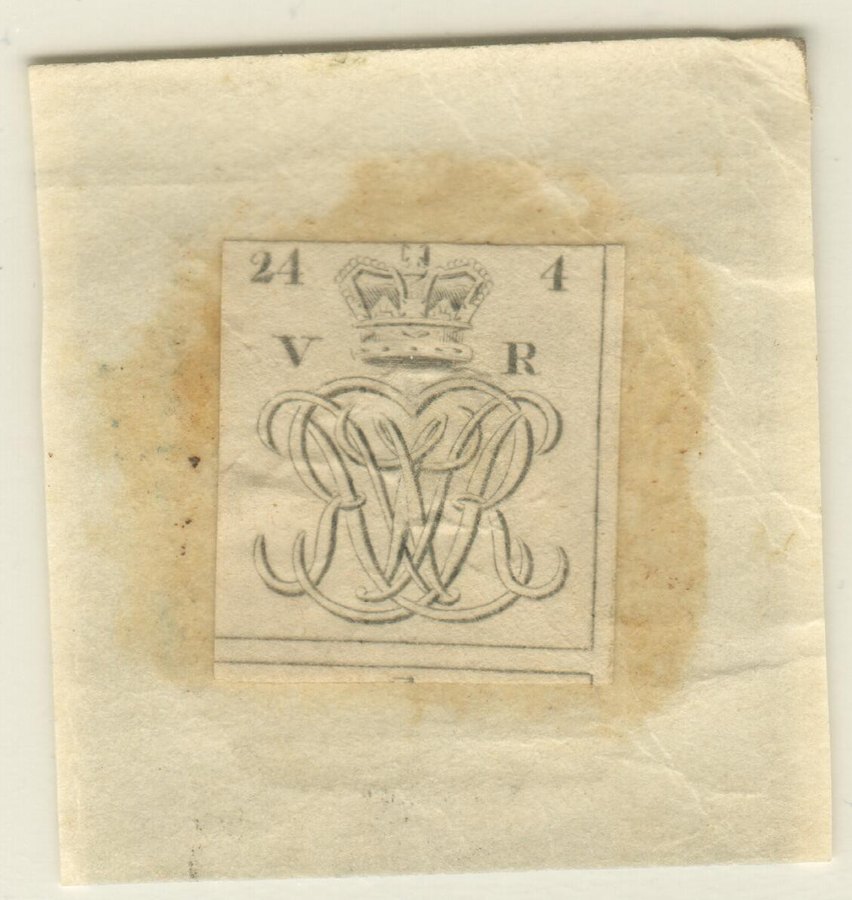
Victoria's cypher labels began with a new plate registered in 1839 and numbered 1 to 320. Its first recut, marked by a line through the number, is first seen in October 1845; this label has no such line, so it was printed from the plate in its original state. The number is split either side of the crown, 24 and 4 – position 244, if it is read like George III's second plate, though no source seen says so for Victoria's. A year after the plate was registered came the Penny Black, and from 1847 embossed postage stamps were made at Somerset House, where the Stamp Office had been since 1789.

Sources: Stampboards: UK Royal Cypher Labels, 1701–1922, Wikipedia: Penny Black, Wikipedia: British embossed postage stamps, Wikipedia: Somerset House

No. R10
R10
No. R10, reverse
R10 · reverse
No.TypeValueColourDescriptionPrintedMintUsed
R10blueDie letter B; value not legible. Cypher label VR, 24 | 4 either side of the crown, no line through the number: Victoria's first plate, original state, from 1839. Collector's note: £30, die 1837–1844, label 1839–1850